Quick summary
Your website headline should instantly tell visitors (and Google) what you do, who it’s for, and where you do it. Skip vague lines like “Welcome to my website” and use clear, SEO-friendly wording that matches what people actually search for. A strong headline builds trust fast, improves conversions, and supports your rankings without sounding spammy.
"On average, 5x as many people read the headline as read the body copy. When you’ve written your headline, you’ve spent eighty cents out of your dollar." David Ogilvy
What do I mean by web page headline?
The “page” headline in this blog article is How do I write a compelling SEO headline for my website?
Headline writing is an essential part of content writing and digital marketing in general.
Why is this important? Your SEO friendly headline should not be used for marketing speak. It has three critical roles:
- It confirms to the user that they are on the correct page (after they click on a search result in Google, for example).
- It should tell the reader what the page or blog post is about.
- It has a vital role in Search Engine Optimisation as search engines use the content of the headline to determine what a specific page or post is about. They assume that the most important keyword of a page or post is included in the first headline.
The page headline should always have the H1 tag (headline 1), and this H1 tag must only be used once per page or post.
Imagine every page and blog post on your website is a chapter in a book. Each chapter would also only have one chapter headline.
Your page or post headline has several tasks to fulfil:
- It needs to capture the reader’s attention. Spend some time creating a good headline encouraging them to read on. The headline is the first thing a website visitor reads, and within seconds, they decide whether to stay or to click the button of doom – the “Back” button.
- You can set the reader’s expectations by giving a preview of the page content.
- Search engines use the page or post headline as an essential ranking signal. A great headline helps a search engine determine what a page is about and whether or not to display it in the search results.
- A good headline can also enhance shareability. Content with an intriguing headline is shared more often than content with a boring one.
- A good headline can also drive conversions. If you link to your page or post with a dull headline, people won’t click on it.
- Good headlines can also strengthen your brand identity. Your readers will look out for new posts when you keep posting interesting content with good headlines.
When we look at the headlines of the most boring pages on anyone’s website – the Terms & conditions page or the Data Protection Page, they usually just say “Terms & conditions” or “Data Protection Policy”. We know instantly what the page is about. No woolly wording is required!
Meta Title & Meta Description
A quick word about meta tags: Every page, post, and product should have its own unique title tag (also know as SEO title or SEO title tag, and SEO headline). If you have a WordPress website, and you use YOAST SEO, you simply enter the target keyword into the plugin on a specific page. The plugin then checks if you’ve done SEO well on this particular page and if your content contains enough keywords.
You should also craft a good SEO meta description. This meta description is then checked by search engines. They compare the content in your description with the content on your page. If your meta description matches, they might use your crafted meta description in the search engine results. If it doens’t, they will create their own and display it in the search results. Your most important keyword phrase should be included in both the meta title and the meta description. This description is also often displayed when you share a blog post on social media, for example.
In this article, you will learn how to craft a good headline for your web pages, blog posts, service and product pages.
Here’s a golden nugget for you:
Search Engines do not index websites, but they index web pages. They see your individual pages and blog posts as individual containers of information. Each container should be clearly labelled.
First impressions count – and the myth of the attention span: You’re not worse than a goldfish!
Your headline tells the reader what the following content is all about. If your headline is weak or irrelevant, the reader will just bounce, i.e., leave your page. Time Magazine reported in 2015 that people’s attention span is only 8 seconds – less than a goldfish (which “apparently” has 9 seconds) (Source).

But here, you can see the apparent power of a good headline (You Now Have a Shorter Attention Span Than a Goldfish.)
The headline is so strong that to this date, people remember it and keep quoting it – even though it’s entirely and utterly unfounded! No one knows the attention span of a goldfish – let alone how to measure it!
If you look at people’s Netflix-watching behaviour, Netflix reported people to watch, on average, 2-6 episodes in a row. How can the attention span of 8 seconds hold up? How could you read a book or this blog post with such a short attention span?
The Times Magazine headline resonates and is “believable” because the online content – particularly video content – is getting shorter and more “snackable”.
Snackable content is short, neat, and easy to consume. It’s called snackable because it’s quick and easy to digest — just like a real snack. — L. Scheiblhofer (Source)
The authors of short-form content spend a lot of time crafting their headlines so people click on them to consume their content.
We have gotten used to seeing clickbaity headlines and often smell them a mile away.
It’s, therefore, essential to use sound and relevant headlines to build trust with our readers.
You want to avoid clickbaity headlines at all costs!
Clickbait is a sensational or misleading headline design to grab your attention and make you click on a link, often to generate more website traffic or ad revenue. It may not consistently deliver on the promise in the headline, leaving the reader disappointed or misled.
Both page and blog headlines can help set the scene for your brand. When you publish a blog article, what will readers say about it? Is the headline enticing, exciting and relevant enough for them to click? Or will they yawn and scroll before your content is even looked at?
What are the elements of a good headline?
- Effective headlines grab attention and spark curiosity.
- They build trust and credibility.
- Well-crafted headlines set expectations and fulfil them.
- Some headlines create a sense of urgency.
- Curiosity and knowledge gaps in headlines drive readers to explore further.
Your sub-headlines are important for your readers and SEO. Make them count!
Apart from the main page or post headline, all headlines in a blog post and on a page matter. People scan pages to decide whether to spend time reading the entire page or post.
The best thing you can do is what I call “Headline Scoop”. Remove all text between your headlines. When you read the headlines now, do they flow? Do they make sense? Do they tell the reader what your page content is about?
Why headlines are essential for search engine optimisation
Search engines look at your headlines and analyse the text and structure of your headlines to determine if they are relevant to be shown in the results when someone searches for content similar to yours.
- Search engines look for keywords and key phrases within your headlines to understand your content. Keywords are essential because they help search engines match the content with user queries.
- Search engines pay close attention to the HTML markup of headlines. Headlines are often marked up using specific HTML tags like <h1>, <h2>, <h3>, etc., which provide hierarchical information about your content. You need to use these tags correctly so search engines understand the structure and importance of different headings within your content.
- Search engines consider the overall context of your content. They analyse your whole text, including images and other elements on the page, to better understand the topic covered in your headline.
- Search engines want to provide the most relevant results to their users. They assess whether the headline matches the user’s search intent. For example, if someone searches for “best smartphone reviews,” search engines will prioritise pages with headlines that seem to offer smartphone reviews.
- Search engines also check how often other websites link to a page with a particular headline. If many reputable websites link to a page with a specific headline, it suggests that the content is authoritative and relevant, which can boost your search engine ranking.
- Some search engines, like Google, consider the freshness of the content. If a headline indicates that the content is up-to-date and relevant to current trends or events, it may receive higher visibility in search results. You can achieve this by including the current year or a date in the headline.
- User engagement metrics, such as click-through rates and time spent on a page, can provide feedback to search engines about the quality and relevance of the content associated with a headline. If users consistently click on a search result with a particular headline and spend time on the page, it signals to the search engine that the headline is compelling.
Use a headline analyser tool like the one from Coschedule to improve your headlines on your website.
How should you use keywords in your headlines?
The danger with keywords in headlines is reduced readability and keyword stuffing.
Let’s look at some best practices for using keywords in your headlines to improve your SEO.
- Relevance: Ensure your headline directly relates to your content’s topic and naturally includes the relevant keyword.
- Keyword Placement: Place the primary keyword near the beginning of the headline for better visibility.
- Conciseness: Keep headlines concise and to the point, using as few words as necessary to convey the message.
- Clarity: Ensure the headline is clear and understandable, avoiding overly complex language or jargon.
- Natural Language: Write headlines that sound natural to readers, avoiding forced or unnatural keyword stuffing.
- Unique and Descriptive: Craft unique headlines that accurately describe the content, enticing readers to click.
- Avoid Duplicate Headlines: Ensure each headline is unique and not duplicated across your site.
- Use numbers in your headlines when applicable, as they tend to attract attention.
- Include Power Words: Use powerful, action-oriented words to make headlines more compelling.
Think about your readers first when writing your headlines. Don’t just write headlines for SEO!
Balancing headlines for SEO and readers means creating titles that use essential keywords for search engines to find your content while making them attractive and easy to understand. This helps your content get noticed by both search engines and human readers.
How to write a compelling headline for a page on your website
First, what’s the difference between a page and a blog post?
Your website’s pages tend to contain information about your offerings and services. On the other hand, your blog posts may contain helpful content for your readers, such as how-to guides, or include company updates.
Page headlines differ from blog headlines as their main aim is to confirm.
We need to briefly examine the meaning of “before the scroll”. This term has been adapted from newspaper design for which the term “above the fold” is used.

"Above the fold" refers to the top half of a newspaper's front page. It's where the most eye-catching headlines and stories are placed to grab your attention without opening the newspaper. On your website, it's the part you see first without scrolling down. Online, it’s called “before the scroll”.
What your homepage headline should include
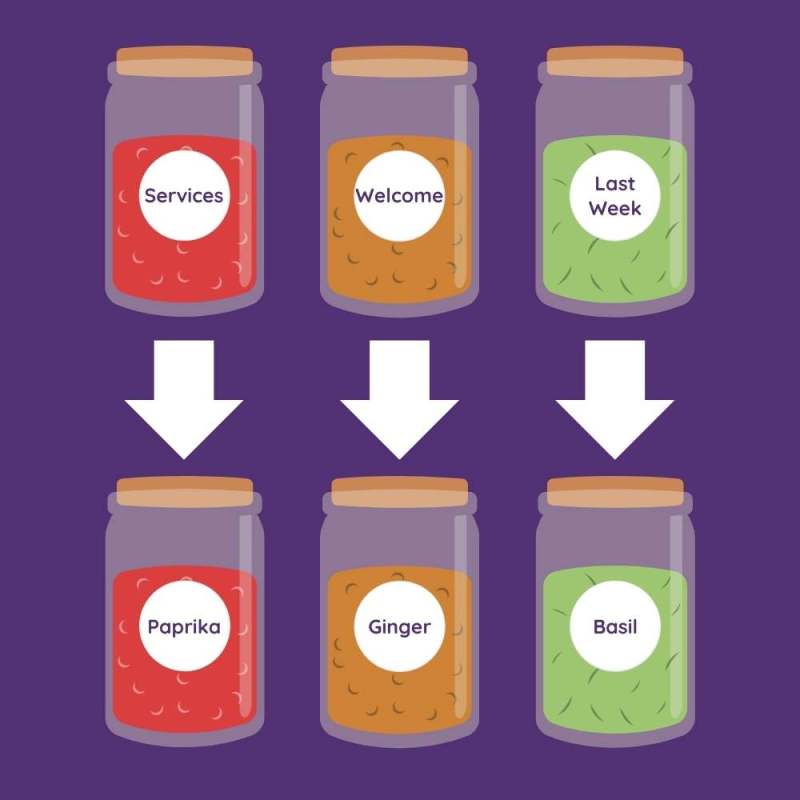
Remember, your homepage headline needs to confirm that the visitor is on the correct website. Say very clearly what it is you do, (where you do it) and for whom.
Let’s say someone lands on your website’s homepage, and before they scroll, they see these headlines:
- Website 1: visual storytellers documenting the human connection at its realest and weirdest, artfully.
- Website 2: Los Angeles Wedding Photographer. A luxury experience from start to finish
Website 1: We have no idea what the website is about!
Website 2: It’s crystal clear.
When I work with business owners who’ve built their websites, I often see headlines that look like the one in Website 1.
They’re trying too hard to create some enticing marketing headline, which confuses your website visitors.
The headline of any of your website pages needs to be clear and concise.
If you want to use marketing speak – use headline 2. Keep your headline 1 for what the page is about and include the most important keyword for this page.
Examples of good and bad homepage headlines
The following examples are real-world examples that I have found online by doing a simple Google search. You will immediately see which ones make sense and which ones need improvement.
Good Homepage Headline Examples
Professional Edinburgh-based joiners and builder
Edinburgh Wedding Photographers
Wedding photographer for large weekend weddings in Scotland
Upholstery Repair Glasgow
Luxury Kitchen Designer in Fife
Unique & Tall Wedding Cakes by Cake Designer in Essex
Bad Homepage Headline Examples
Why are these bad? Because we have no idea what they sell, where they sell it and to whom.
Evolution Contractors Edinburgh
Home improvements just got easier
Building services in Edinburgh
Add value and space with a home extension
R.M. Maintenance Services
Cinematic Fine Art Photography
Your wedding story is a film
The little kitchen
Welcome to Jackie's Cakes
Oakleaf cake bake shop
Cut the cake and celebrate
Welcome to cakes by design edible art
What headline should I use on my service pages?
Your service pages are different to your homepage. Here, you can go into more detail of one of your services. Rremember – Google indexes web pages, not websites! Therefore, make sure you have one page for each service and you optimise each page accordingly.
Examples of good and bad service page headlines
Remember: every headline that’s not optimised is a wasted SEO opportunity and also leaves your reader confused. Your website visitor needs to grasp instantly what a service page is about.
I searched in Google for “joiner Edinburgh”, and then I clicked on a service page. Here are the examples:
Good Service Page Headlines
Navigation: Building - Roughcasting
Headline: Dunblane and Stirling’s Roughcasting Experts
Navigation: Therapy Sessions
Headline: Hypnotherapy sessions in Edinburgh
Bad Service Page Headlines
Navigation: Services
Headline: Our service listings
Navigation: Performance Development
Headline: Achieve your goals
Examples of good and bad product titles – and product page headlines
If people can buy products and/or services directly from your website through an online shop, your product titles should be super clear and contain keywords.
Use words in your product title that people would enter in Google to find a product like yours.
If you’re an artist, you may want to name your art and give each piece a unique title that is meaningful to you. However, this title might not mean anything to strangers.
It’s still okay to name your art; however, use the title as a sub-headline and don’t include it in your main product title.
If in doubt, check what the big names in your industry do!
Let’s look at some examples of good and bad product titles.
Good Product Page Titles
Heart Tag Charm Bracelet
Radley Abingdon Road Large Tote Bag, Cedar
Estella Bartlett Love You To The Moon and Back Pendant Necklace, Silver
Bad Product Page Titles
Nefertiti Bracelet
Santa Rose Necklace
CABEZA, 1982
Alpe d'Huez
For example, if you want to rank for the phrase “Egyptian Inspired necklace”, you need to include this key phrase in your product title to have a chance to rank for this.
Examples of good and bad blog post headlines
The main thing to understand is that your blog should not be used as a business diary. While it’s okay to include the odd business update on your blog, you should use it to provide helpful content around your product, service, or industry that your potential customers look for in Google.
Your blog can be your biggest SEO lever and – if used correctly – can attract more people to your website than all your service pages combined!
A good blog article headline can encourage someone to click on your website over another. Spending a bit of time crafting a good headline can mean substantially more website visitors.
Let’s look at some examples. In Google, I searched for: “best music type for wedding”
- The ultimate guide to wedding music genres
- Your guide to wedding reception music
- 5 different wedding band music styles to choose from
- Choosing the best music genre for your wedding
- Everything you need to know about choosing music for your wedding ceremony
- How to choose music based on your wedding style
- Music for weddings: What to play and when
Which one would you choose? The first one is pretty good!
I did another search for this “how to teach a child to ride a bike”. Here are the titles:
- How to teach a kid to ride a bike
- How to teach a child to ride a bike
- How to teach a kid to ride a bike in 30 minutes
- Teach a child to ride a bike without stabiliser in nine steps
- Top tips to teach a child to ride a bike
- Teaching children to ride a bicycle
- Tips for parents on teaching a child to ride a bike
Which one would you click on? I’d choose the one that says “in 30 minutes” as this sparks my curiosity.
Don’t make your page/product/post title an afterthought.
Think what people might enter in Google to find content/a service/a product like this, and then include these keywords in the title.
Your page/post/product headlines are an important ranking signal for search engines. So make sure they count!