Quick summary
Setting up an online shop starts with choosing the right platform (like Shopify or WooCommerce), organising your products and categories, writing clear product descriptions, setting up secure payments and delivery options, and testing the customer journey. Focus on simple navigation, fast performance, good imagery, and basic SEO so customers can find and buy with confidence.
The truth about shopping cart websites for small business owners
You pour your heart into what you make, whether it’s hand-thrown pottery, jewellery, hand-painted prints or something beautifully unique. Naturally, the next step feels like setting up a shopping cart website and waiting for the sales to roll in. After all, you’ve seen others do it.
But here’s the truth that no one talks about: having an online shop doesn’t mean people will find it, trust it, or buy from it straight away. For many small creative businesses, a shopping cart site can feel more like a silent showroom than a thriving marketplace.
Having a shopping cart website is only the beginning. It’s like buying a shiny new pair of trainers. You’ve got the gear, but you haven’t done any training yet—let alone started running.
Find out what it takes to run an online shop, and why it’s normal to find it hard at the start. It also explores other ways to sell your products by tapping into existing marketplaces, saving you time and money in the early days.
Let’s walk through what happens when you launch a shopping cart site as a micro business, and what might work better when you’re just starting out.
Setting up an online shop is the easy part
Most platforms make it feel like launching your online shop is as simple as choosing a template and uploading a few photos. And to be fair, it can look beautiful by the end of the day. But having a good-looking shop doesn’t mean people will find it, or that they’ll feel ready to buy.
The hard part isn’t setting up the shop. It’s everything that comes after: getting traffic, building trust, writing product descriptions that sell, and figuring out what to say on social media without feeling awkward.
If you’ve ever looked at your site stats and seen zero visitors, you’re not alone. It’s one of the most common (and frustrating) surprises for women setting up a creative business online.
Here’s a list of popular website platforms that make it seemingly easy to set up a shopping cart website—but often don’t highlight the hard part (getting traffic and making consistent sales):
- Shopify
- Squarespace
- Wix
- WordPress with WooCommerce
- GoDaddy Website Builder
- Weebly (by Square)
Here’s the issue: No one buys from a shop they’ve never heard of
Online shopping is built on trust, which takes time to earn. Your visitors want to know who you are, what your values are, how your items are made, and whether others have bought from you.
For example, Amazon has completely changed what customers expect from online shopping. With next-day delivery, easy returns and round-the-clock support, they’ve set a gold standard for convenience and trust. Most shoppers now expect that same level of service, no matter how small the business. So when they land on a handmade shop or micro business site, anything less can feel clunky, slow or risky by comparison.
That’s why simply launching a site doesn’t lead to sales. Most people won’t buy the first time they land on a shop page—especially for art, crafts or anything handmade. It’s not just a transaction. It’s a relationship.
People need to warm up. They need to see your work regularly, understand your story, and feel a connection before they’re ready to click ‘add to basket’.
How many people actually buy from an online shop?
Not everyone who visits your website will buy something—and that’s completely normal.
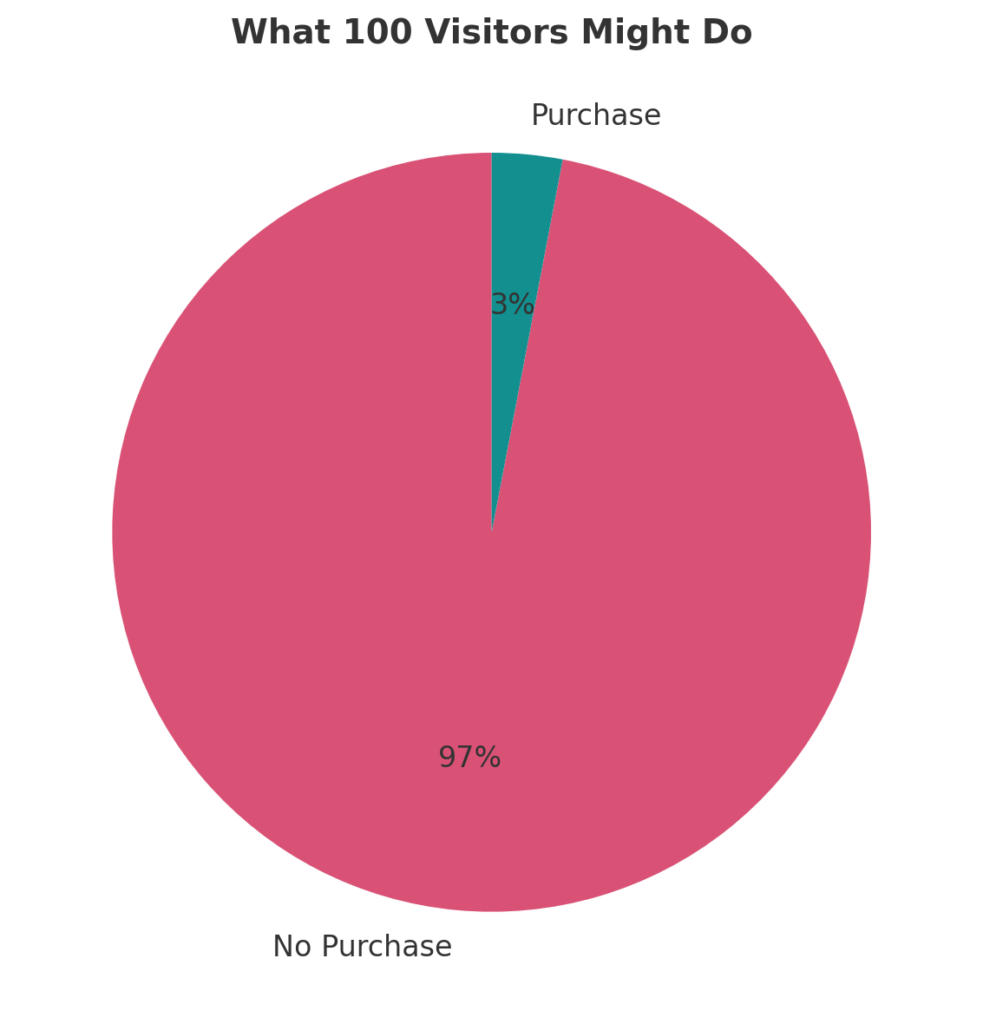
Most online shops make a sale to around 1 to 3 out of every 100 visitors. That’s called your conversion rate. So if 100 people look at your shop and 2 of them buy, your conversion rate is 2%.
If your shop converts at more than 3%, you’re doing better than most!
You can read more about this here on the Shopify website.
You’re not just a shop owner, you’re now wearing ten hats
As soon as your shopping cart site goes live, your job description explodes. You’re no longer just the maker—you’re now:
- A product photographer
- A website editor
- A copywriter
- A social media content creator
- A customer service rep
- A packaging department
- A marketing strategist
Most people completely underestimate how long it takes to promote and maintain an online shop, let alone make your products. It’s no wonder many business owners feel exhausted and disheartened just weeks after launching.
Years ago, I helped my customers set up shopping cart websites, and when there were no sales within a few weeks, the questions would come in. They added the products and then were hoping for the best. Big companies constantly use advertising, SEO and social media to promote their products.
It can be super overwhelming having to do all this for a tiny online shop. Any web designer can set up a shopping cart website relatively quickly. But having a store and having sales are two entirely different things.
Ranking in Google doesn’t happen overnight
Launching a new online shop on a brand new domain starts from zero, with customers and search engines. Google doesn’t yet know if your site is trustworthy or relevant, so it’s unlikely to show it high up in search results immediately.
One thing to understand is domain authority. Think of it like a reputation score. Sites like Etsy, Not On The High Street, or Amazon have been around for years, have loads of links pointing to them, and regularly publish fresh, helpful content. Google trusts them. Their reputation score is very high.
Your new website, on the other hand, is like a new kid on the block. It needs time, content, backlinks, and consistent effort before gaining traction. Your reputation score is literally zero.
And popping in a few keywords here and there won’t cut it. SEO isn’t just about using the right words—it’s about building trust and authority over time.
So when your lovely new website with 20 products doesn’t appear on page one of Google, it’s not because your products aren’t good enough. It’s because you’re up against giants who’ve spent years (and a lot of money) perfecting their marketing game.
Building trust takes consistent visibility
Most successful online shops didn’t launch and go viral overnight—they built slowly, brick by brick, by showing up consistently.
This could mean posting regularly on Instagram, telling the story behind each item, emailing a list, sharing behind-the-scenes photos, or simply starting conversations.
Your first 10 customers might not come from your website at all. They might come from your DMs, a local event, or a friendly recommendation. That’s why it’s important not to rely solely on a shopping cart site to do the work.
A shopping cart isn’t always the best starting point
This might feel a little uncomfortable to hear, but it’s said with total kindness: launching your shopping cart site isn’t always the smartest first move. It can feel like the “proper” thing to do. Still, for many micro businesses—especially when you’re just starting—it drains time, energy and money without delivering many sales.
If you’ve only got a handful of products, or if each item you sell is unique, made-to-order, or deeply personal, an e-commerce setup might complicate things. You’re asking a cold visitor to browse, click and trust—all without building a relationship first.
Instead, consider starting with platforms that already have an audience—places like Etsy, Folksy or Not On The High Street. These marketplaces have built-in traffic, so you don’t have to do all the heavy lifting to bring people to your shop. Yes, you’ll pay a small fee or commission, but that cost can be worth it while growing your brand and learning what sells best.
Marketplaces with already built-in audiences:
- Etsy
- Folksy
- Numonday
- Not On The High Street
- Shop Handmade UK
- Facebook Marketplace / Facebook Shops
- Instagram Shop / Instagram DMs
Here’s a quick comparison of the fees:
| Your Product Price | You sell this many per month | Total Revenue | Total Etsy Fees | Total Shopify Fees |
| £50 | 10 | £500.00 | £54.50 | £31.50 |
| £100 | 10 | £1000.00 | £107.00 | £41.50 |
| £200 | 10 | £2000.00 | £212.00 | £61.50 |
I can hear you say – the Etsy fees are way too expensive and you should build your own shopping cart website. Not so fast!!
Etsy has a built-in audience, terms & conditions, customer support, advertising options and more. That’s what you’re paying for. It’s better to sell more products at a higher cost than no products at a lower cost!
This doesn’t mean you can’t have your own website too—it just means your site might be better used to tell your story, show off your work, and connect with potential customers more personally. Sales can still happen through messages, social media or links to your marketplace listings.
Think of it as starting where the people already are—and inviting them into your world, one step at a time.
It’s better to sell more products at a higher cost than no products at a lower cost!
There are easier ways to get started selling products online
If you’re feeling overwhelmed or deflated by your online shop, here are some gentler ways to sell and grow your audience without doing it all at once:
- Start selling through Instagram, Facebook or local markets
- List on Etsy, Folksy or Not On The High Street to get early visibility
- Use a brochure-style website that shows your work and invites people to message or email to order
- Build a simple mailing list so you can stay in touch with people who love your work
These steps help you build trust and find your early fans, before you commit to the time and cost of a full-blown shopping cart site.
When an online store does make sense
Once you’ve built an audience, understand what sells well, and have repeat customers, you’ll be in a far stronger position to benefit from an online shop.
At that stage, a shopping cart can help save time, streamline orders, and make your business feel more established. But by then, your shop is an extension of your business, not the thing that builds it.
Shopping cart or not?
You haven’t failed if your shopping cart hasn’t brought in sales. You’re just in the early chapters of your business, and that’s a powerful place to be.
There’s no shame in starting small, keeping things simple, or selling in more personal ways. What matters most is connection and clarity. When you build those, the shop can come later, and it’ll actually work when it does.