Quick summary
A website with just 37 visitors a month might look like it’s underperforming. But when those visitors generate around 10 enquiries for high-value building projects, the numbers tell a very different story. As AI reduces some informational website traffic, businesses should focus less on how many people visit and more on whether the right people visit and take action.
One of my clients gets around 37 visitors to their website each month.
That sounds terrible, doesn’t it?
If I presented that number at the end of a website or SEO report, you could quite reasonably ask what on earth had gone wrong.
Thirty-seven people. In an entire month.
Except there’s another number that matters considerably more.
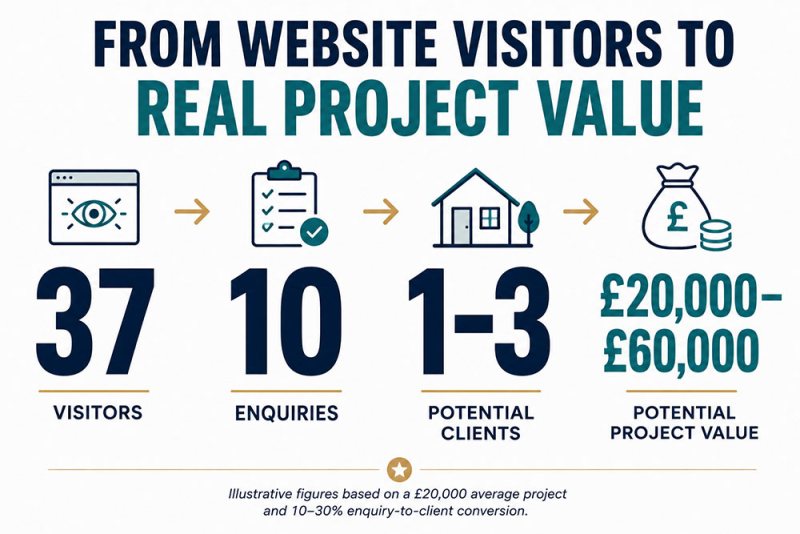
Those 37 visitors generate around 10 enquiries.
My client is a small building company specialising in garage conversions and home extensions. These are projects that can easily be worth tens of thousands of pounds.
Suddenly those 37 visitors look rather different.
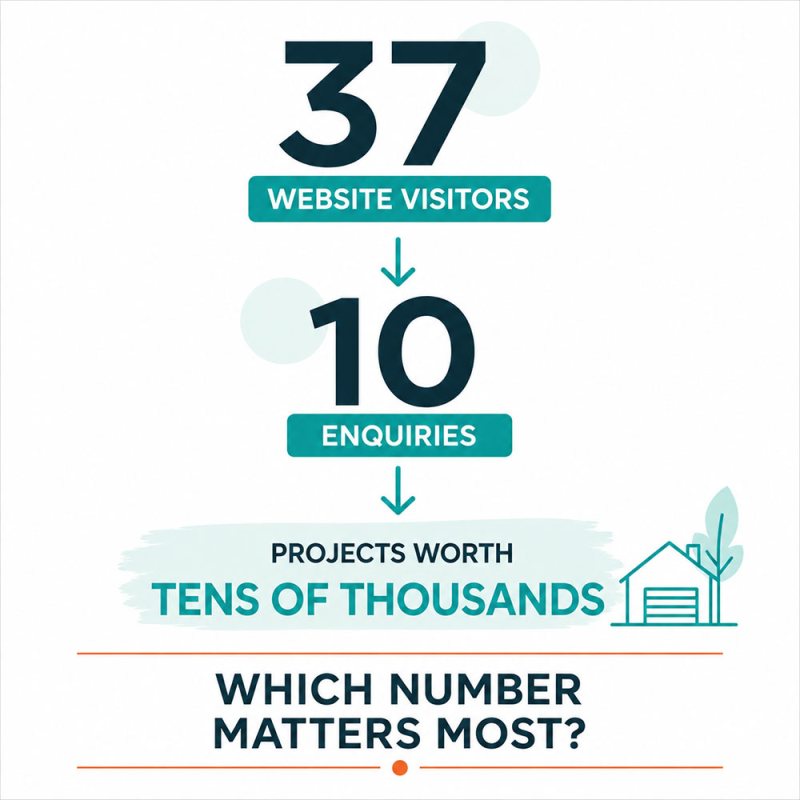
37 visitors and 10 enquiries is an extraordinary conversion rate
We talk a lot about conversion rates in web design and SEO.
A conversion happens when someone visiting your website does the thing you want them to do. For a builder, that will usually mean making an enquiry, calling the business or requesting a quote.
You’ll often see 1–3% quoted as a reasonable website conversion rate, although there isn’t one universal benchmark. Conversion rates vary enormously depending on the industry, traffic source, price of the service and what counts as a conversion.
For context, Ruler Analytics found an average conversion rate of around 2.9% across 14 industries. Its more recent data for Construction & Engineering puts the figure at around 4.9%, although again this varies considerably depending on where the website traffic comes from.
Now let’s look at this builder.
10 enquiries from 37 visitors gives us a conversion rate of approximately 27%.
That’s not slightly above average.
It’s in a completely different league.
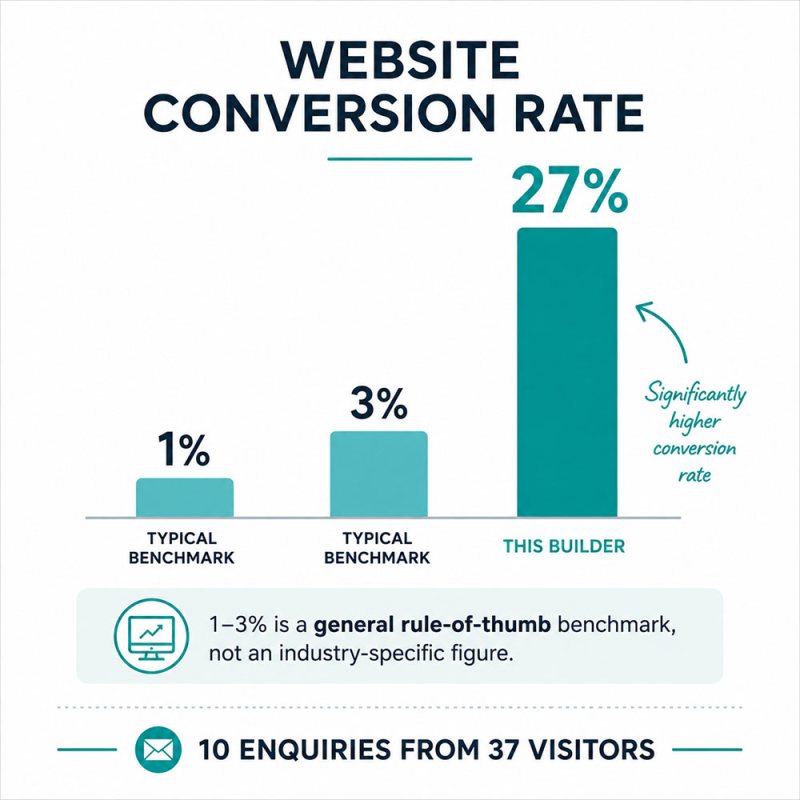
Of course, one month with only 37 visitors is a relatively small sample, so I wouldn’t claim that this website will maintain a precise 27% conversion rate forever.
But this isn’t really about celebrating a conversion-rate statistic.
It’s about asking a much more important question:
What is the website actually there to achieve?
We have become obsessed with website traffic
More traffic must mean better SEO.
More page views must mean a better website.
More impressions must mean greater success.
Not necessarily.
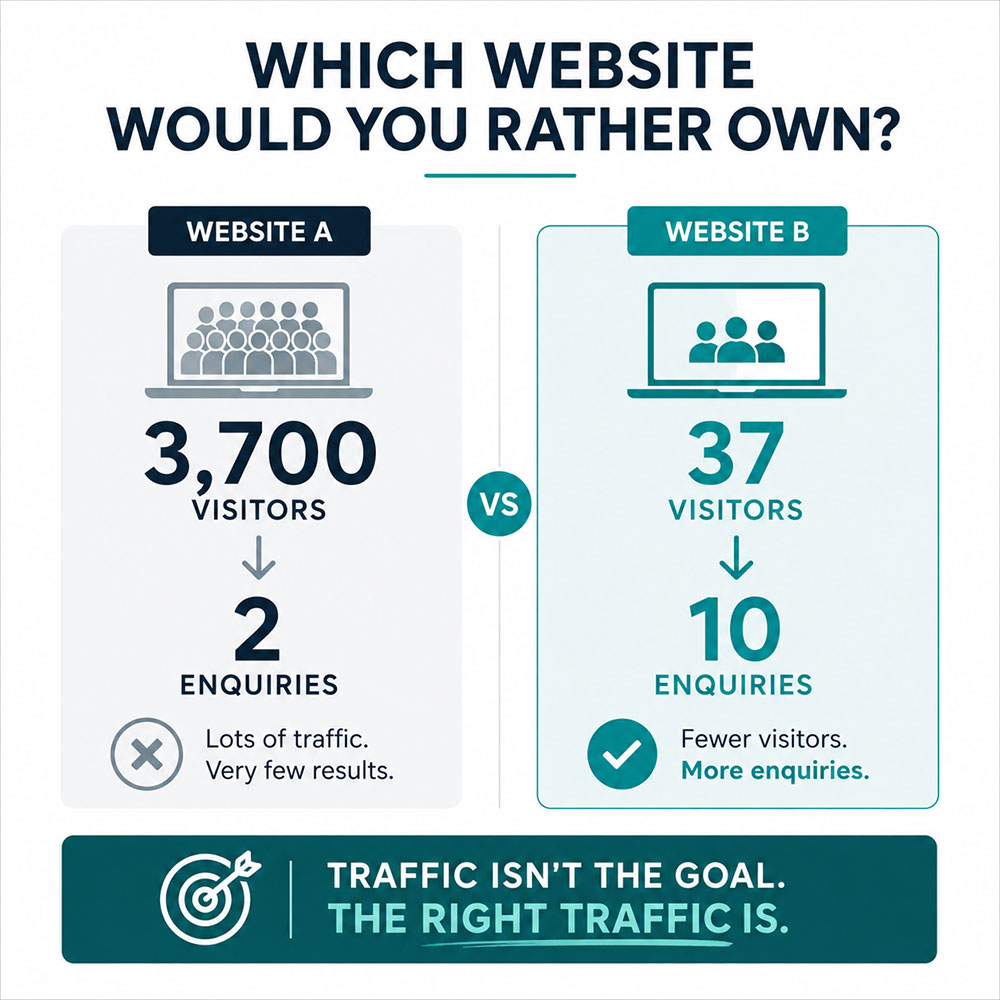
I’d rather have 37 visitors and 10 genuine enquiries than 3,700 visitors and two enquiries.
The first website is doing its job. The second one might give you a prettier Google Analytics report, but I’d rather have the phone ringing.
AI is changing website traffic
People don’t always need to visit a website to find an answer anymore.
They can ask ChatGPT. They can read a Google AI Overview. They can use other AI search tools to compare options, understand terminology or answer the basic questions they might previously have clicked through to several websites to research.
That means some websites are likely to see fewer visits as AI becomes a bigger part of the way people search.
But there’s an important distinction.
Fewer visitors doesn’t automatically mean fewer customers.
Think about why someone visits a builder’s website
Someone might previously have visited a builder’s website because they searched for something like:
“Do I need planning permission for a garage conversion?”
Today, they may get that answer directly from Google or ChatGPT.
That visit might never appear in your website analytics.
But that person wasn’t necessarily ready to hire a builder anyway.
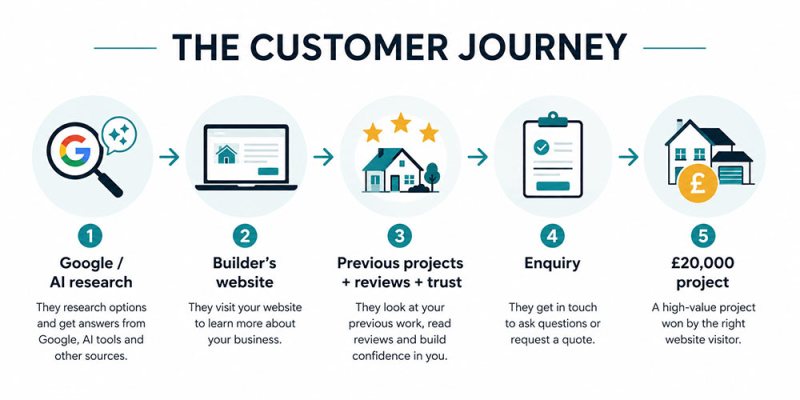
Now think about someone who is actively looking for a company to carry out their garage conversion or home extension.
They’re considering spending tens of thousands of pounds, so they’re probably going to want to investigate the company before getting in touch.
They’ll want to see previous projects, photographs and reviews. They’ll want to know which areas the builder covers, understand how they work and feel confident that this is a real, established business they can trust.
And eventually, they’ll want to make contact.
That is the website visitor I care about.
Interestingly, early 2026 conversion data from Ruler Analytics also suggests that visitors arriving through AI referrals can be particularly valuable. Its Construction & Engineering benchmark puts AI referral conversion at 6.3%, compared with 5.9% for direct traffic. AI referral traffic is still relatively new, so I wouldn’t treat that as a universal rule, but it’s another reason to look beyond raw visitor numbers.
Now let’s talk about the money
This is the part I think business owners need to consider much more carefully.
Garage conversions and home extensions can be worth tens of thousands of pounds. So, for the purposes of some very conservative maths, let’s use £20,000 as an example project value.
My client is receiving around 10 website enquiries a month.
Not every enquiry will turn into a customer, of course.
So let’s look at what happens at a few different enquiry-to-customer conversion rates.
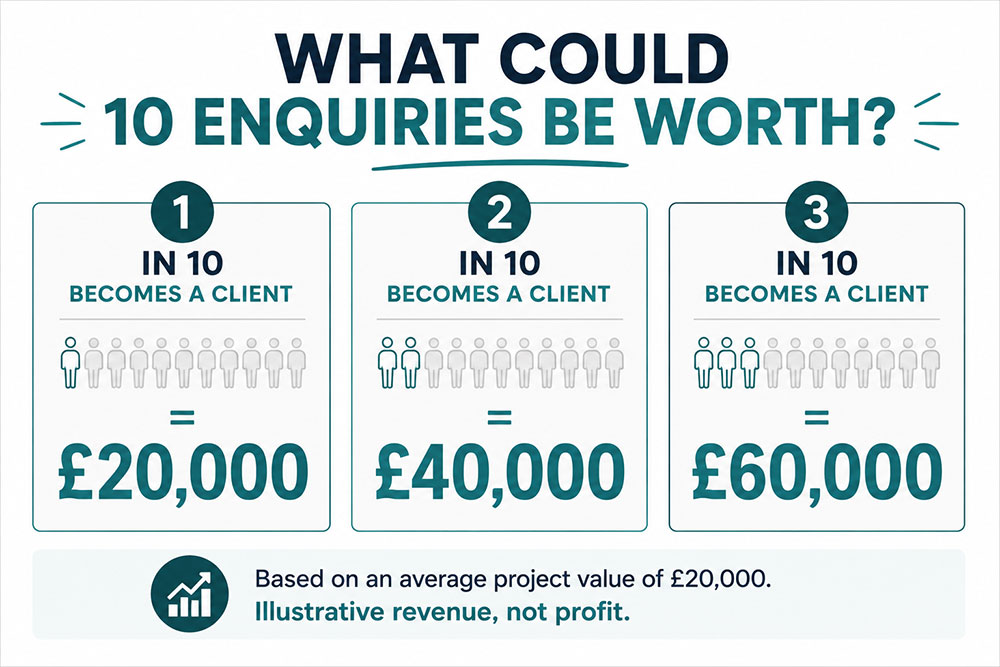
If they win just one project from every 10 enquiries, those enquiries could generate:
£20,000 of work.
If they win two:
£40,000 of work.
If they win three:
£60,000 of work.
And all of that starts with just 37 people visiting the website.
Now compare those figures with the original cost of the website.
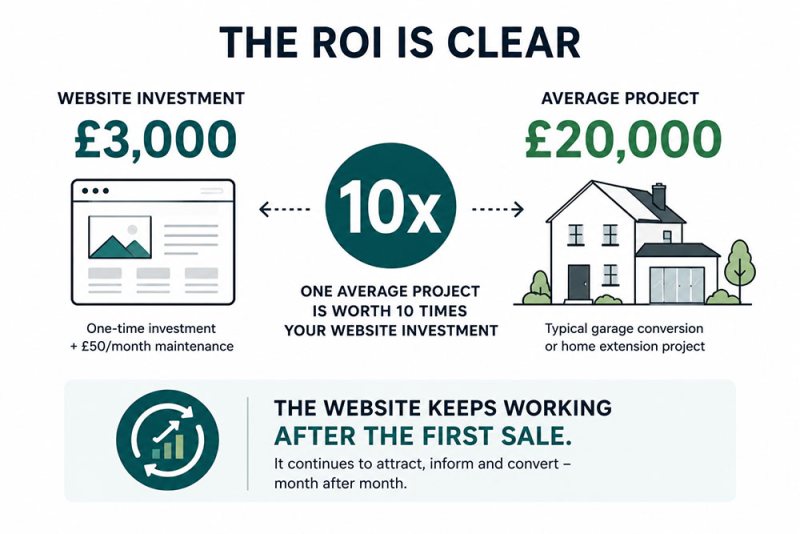
The website cost £3,000
The client originally paid around £3,000 for their website.
They now pay around £50 a month to keep it maintained and updated.
A £3,000 website can sound expensive when you’re looking at the invoice on its own.
It looks very different when you compare that cost with the value of the work it helps generate.
Using our conservative example project value of £20,000, one project is worth more than six times the original cost of the website.
And the website doesn’t disappear after generating that customer.
It stays there, working for the business month after month.
What does that work out at per enquiry?
There’s another interesting calculation here.
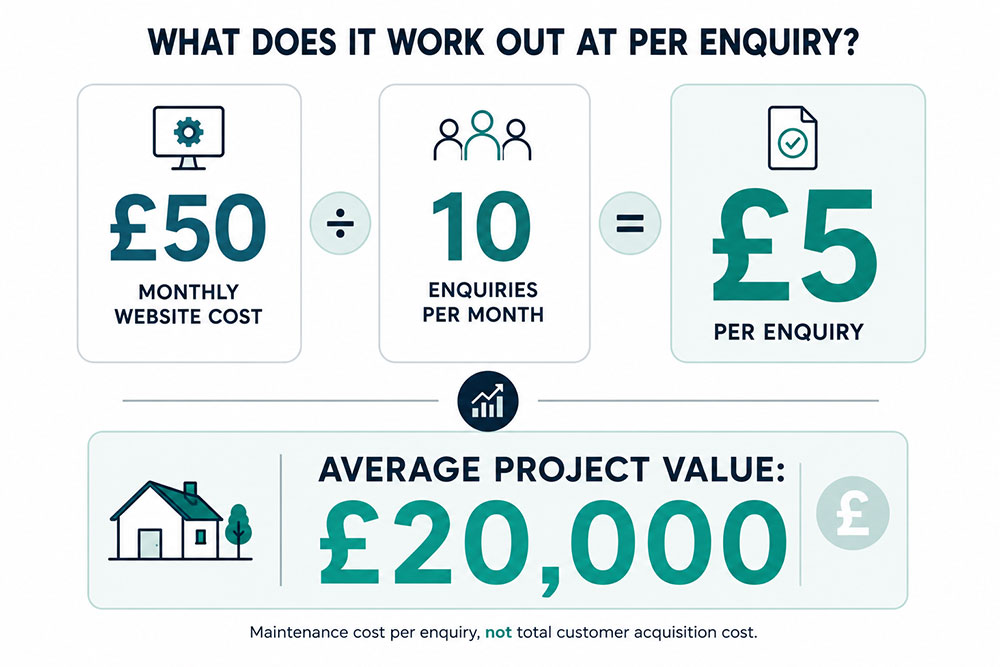
The ongoing website cost is around £50 per month.
The website generates approximately 10 enquiries per month.
So if we simply divide the monthly website maintenance cost by the number of enquiries:
£50 ÷ 10 = £5 per enquiry.
Now, I’m not claiming that their total marketing cost per enquiry is £5.
The website originally cost £3,000. There may also be costs associated with things like social media posting, photography, content creation and other marketing activity. All of those things have a value.
But the calculation illustrates something important.
Once you have a website that attracts the right people and converts them into enquiries, the ongoing cost of generating new opportunities can be remarkably low.
And remember, we’re talking about enquiries for garage conversions and home extensions that can be worth tens of thousands of pounds.
What would you be prepared to pay for a £20,000 lead?
This is an interesting question for any business owner.
If someone offered you the contact details of a homeowner who genuinely wanted a £20,000 garage conversion, what would that lead be worth to you?
£20?
£50?
£100?
£500?
The answer depends enormously on how likely you are to win the work and, importantly, how much profit you make from a £20,000 project.
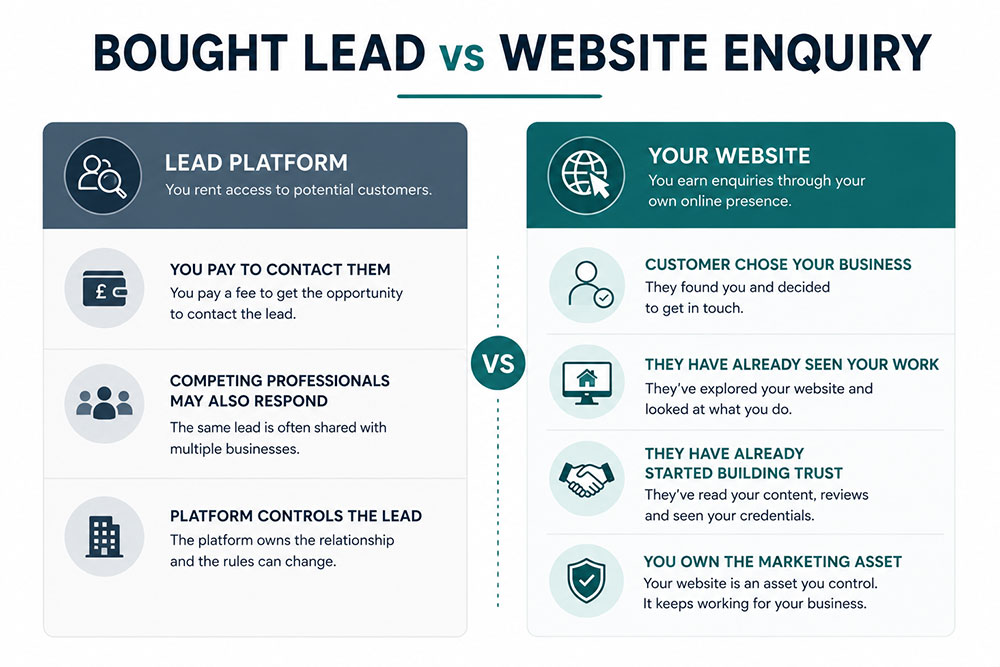
Lead-generation companies already make a business from selling exactly this kind of opportunity.
Bark, for example, sells credits that businesses use to contact potential customers. Its UK credits currently have a standard price of £1.80 each, but the number of credits required for an individual lead varies according to the service and the size and scope of the job. Bark specifically says larger or more complex jobs cost more credits.
Bark also says its lead pricing takes account of the service, value of the job and local supply and demand.
So there isn’t a meaningful fixed answer such as “a £20,000 building lead costs £X”. The market doesn’t work that neatly.
There’s another difference too.
On a lead platform, you are often competing for the same customer. Bark says customers can receive responses from up to five professionals.
An enquiry through your own website is different.
That homeowner has found you.
They have looked at your work.
They have read your reviews.
They have decided they like what they see enough to contact your business.
That’s a very different type of lead.
But couldn’t we get this client more traffic?
Probably.
We could target more keywords, create more content, expand the geographical area, add more landing pages and push harder on SEO.
That would likely increase traffic.
And it might increase enquiries too.
But there’s a problem.
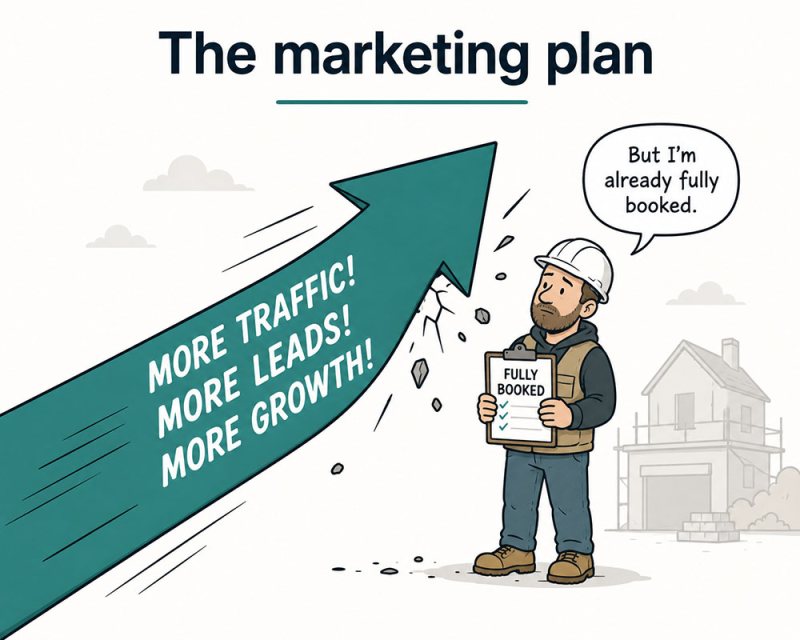
They don’t actually need more work.
This is a small building company. They can only complete a certain number of garage conversions and home extensions each month.
They don’t want to become a huge company. They don’t want dozens of employees. They don’t want hundreds of enquiries that someone then has to answer, qualify, quote and follow up.
They’re happy with the amount of work they’re getting.
The website is already doing what they need it to do: bringing in a steady stream of people who are genuinely interested in the services they provide.
So what exactly would we be trying to fix?
More isn’t always better marketing
Marketing often treats growth as the default goal.
More traffic. More leads. More followers. More customers. More turnover.
But plenty of small business owners don’t want endless growth.
They want a profitable business, a manageable workload, good customers and a steady pipeline of the right projects.
For a business like this, success isn’t generating as many enquiries as possible. It’s generating enough of the right enquiries to keep the diary full.
Your website doesn’t exist to impress Google Analytics
This is the point I want business owners to take away from all of this.
Your website has a job.
And that job isn’t necessarily to attract thousands of people every month.
It’s there to help your business achieve its goals.
For an advertising-funded website, huge traffic numbers might be essential. For an ecommerce business, visitor numbers can be incredibly important.
But for a small building company where a single project can be worth tens of thousands of pounds, the numbers need to be looked at differently.
37 visitors.
10 enquiries.
Potentially one, two or three new projects.
That’s a website doing its job.
Websites aren’t dead. But how we judge them needs to change
AI is changing search.
Some informational website visits will inevitably be replaced by answers provided directly by search engines and AI tools.
We shouldn’t ignore that.
But we also shouldn’t look at a falling traffic graph and immediately conclude that SEO is dead, Google doesn’t work anymore or nobody needs a website.
People making significant purchasing decisions still need somewhere to investigate the business they’re considering.
For a garage conversion or home extension costing tens of thousands of pounds, a website isn’t simply somewhere people go to find an answer.
It’s part of the buying decision.
It shows your work. It demonstrates your expertise. It provides reassurance. It builds trust.
And ultimately, it gives someone a reason to contact you rather than the builder down the road.
The question we need to ask may therefore be changing.
Instead of asking:
“How many people visited my website?”
We should be asking:
“Did the right people visit my website, and what did they do next?”
For this particular client, 37 people visited the website.
Ten of them raised their hands and effectively said, “I’d like to talk to you about a project.”
I’ll take that over thousands of meaningless page views any day.