Quick summary
We rebuilt the Andean Trails website, bringing together more than 220 tours with clearer layouts, tour search and filters, connected destination guides and simpler enquiry forms. The project also included mobile improvements, speed optimisation, cloud hosting and ongoing maintenance. The new website launched on 16 October 2026.
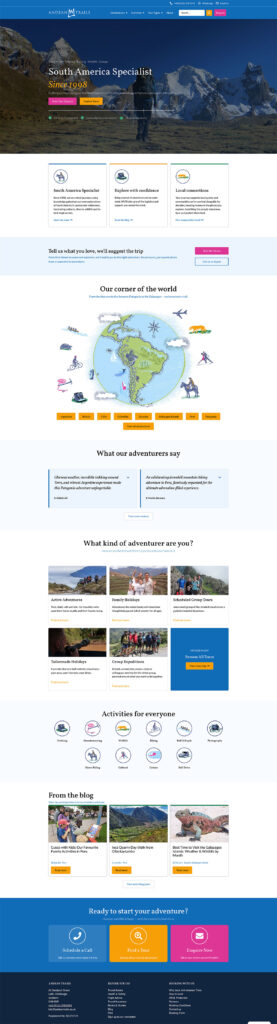
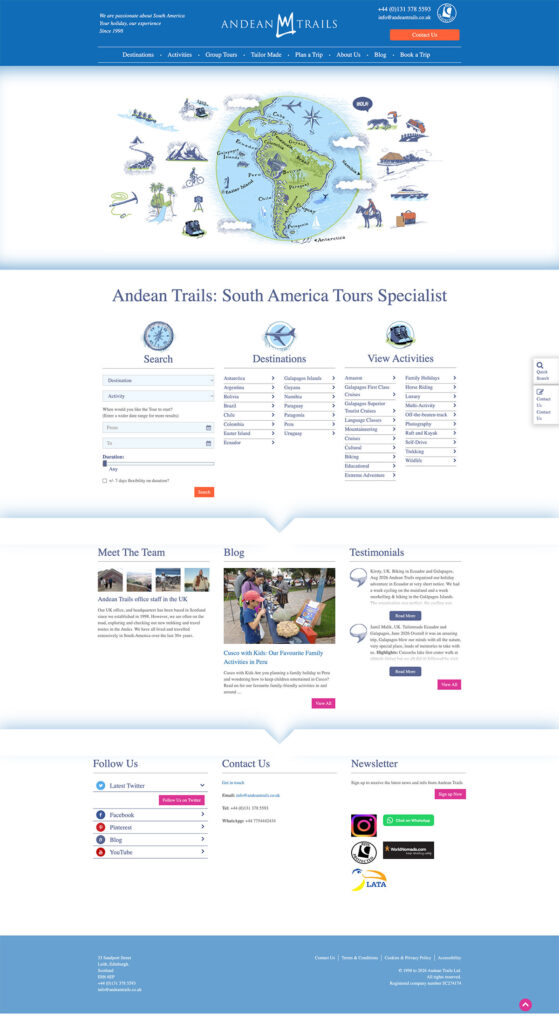
The new Andean Trails website went live on 16 October 2026. Behind the launch was a substantial WordPress rebuild that brought together more than 220 tours, destination guides, activity information, and over 400 blog posts.
For a travel website with this much information, design is only part of the work. Visitors need to find suitable trips, understand what each one involves, and ask questions without repeating information they have already seen.
Our work covered the design, content structure, tour search, enquiry forms, hosting and the practical details needed to bring everything together.
A big thank you to the Andean Trails team for all the work behind the scenes, from sharing their knowledge of the trips to checking content, testing pages and providing feedback throughout the build. Thank you also to our Business Image team for the care, hard work and attention to detail that went into bringing everything together. A project of this size takes a lot of collaboration, and everyone’s contribution helped get the new website ready for launch.
A new design for a content-rich website
The design combines Andean Trails’ blue and pink branding with clear typography and generous space for photography. Detailed itineraries and practical information need to be easy to read, particularly on a phone, where a long tour page can quickly become difficult to navigate.
We improved the presentation of tabs, expandable sections, and page layouts to help visitors move through that information.
Reusable templates also make future updates more manageable. A change to a tour template can carry across the relevant pages, helping the website stay consistent as more trips are added.
Organising more than 220 tours
One of the biggest parts of the project was organising the content behind the pages. The website contains over 1,400 content entries, including tours and supporting information.
We used structured content fields to give tour details a consistent home within WordPress. This helps the team manage information without building each page individually.
It also means that the same information can support several parts of the website, including tour listings, individual trip pages and related content sections.
For a website of this size, getting that structure right makes ongoing editing much easier.
Helping visitors find a suitable trip
Visitors arrive with different starting points. Some know which country they want to visit. Others are interested in a particular activity and want to explore the options.
We built tour search and filtering into the website so visitors can narrow down the available trips. We also worked on the results pages and pagination, helping people browse a large collection of tours in manageable sections.
The aim was to make the range easier to explore while giving individual tours enough space to explain what makes them different.
Connecting tours, destinations and useful advice
A travel website becomes more useful when its content works together.
Someone reading about a destination should be able to discover relevant trips. Someone considering a tour may also want background information about the country or the activities involved.
We connected related content across the website using custom queries and content relationships. This brings relevant information to the page where visitors need it, while giving existing guides and articles a useful role beyond the blog archive.
We also worked on destination and activity FAQs, giving visitors another way to find answers while researching their trip.
Making enquiries more straightforward
A visitor who has found an interesting tour should have a clear next step.
We built and refined the enquiry forms, including passing the tour title through to the relevant form. This helps the Andean Trails team see which trip someone is asking about and saves the visitor from typing it again.
We also improved tour selection in the booking form and clarified the distinction between general questions, tour enquiries, and booking enquiries.
These are small details, but they matter when a website needs to turn interest into a useful conversation.
Working on speed and hosting
Travel websites rely on photography, so image handling was an important part of the build.
We optimised large images, prioritised key imagery, and used lazy loading for images further down the page. We also reduced unnecessary feature loading where it wasn’t needed.
As part of the launch, we moved the website to our cloud hosting and configured caching to help pages load efficiently. After launch, we also moved the DNS to Cloudflare as part of the ongoing hosting work.
Refining the website after launch
Launch day is a milestone, and the following weeks are a useful time to refine a website as people start using it.
Our post-launch work included adjustments to mobile tabs, expandable practical information, tour pagination, enquiry forms and the positioning of itinerary maps.
A website built around the trips and the people using it
This project brought design, content organisation and functionality into one substantial rebuild.
The result is a website that helps visitors explore Andean Trails’ trips, find supporting information and contact the team. Behind the scenes, reusable templates and structured content give the team a more consistent way to manage a large and growing collection of travel information.
If your website has become difficult to manage, or visitors struggle to find what they need, contact Business Image to discuss what could work better.