Quick summary
Yes, people still read blogs. More than 600 million blogs exist online, and around 7.5 million new blog posts are published every day (DigitalApplied). Around 77% of internet users regularly read blog posts (Hostinger). Blog posts were also the third most used content format by marketers in 2025 and remain one of the top five highest-ROI content formats going into 2026 (HubSpot).
Do people still read blogs?
Yes. Blog readership is still huge. Hostinger reports that 77% of internet users regularly read blog posts (Hostinger). DemandSage gives an even higher estimate, stating that 83% of internet users, roughly 4.44 billion people, read blogs (DemandSage).
That makes sense when you think about how people use the internet. You might not always think “I am reading a blog”, but you probably do it all the time.
- Looking up a recipe
- Researching a holiday destination
- Checking product reviews
- Learning how to fix something
- Comparing software or business tools
- Looking for parenting, health, gardening, craft or DIY advice
A lot of those search results are blog posts.
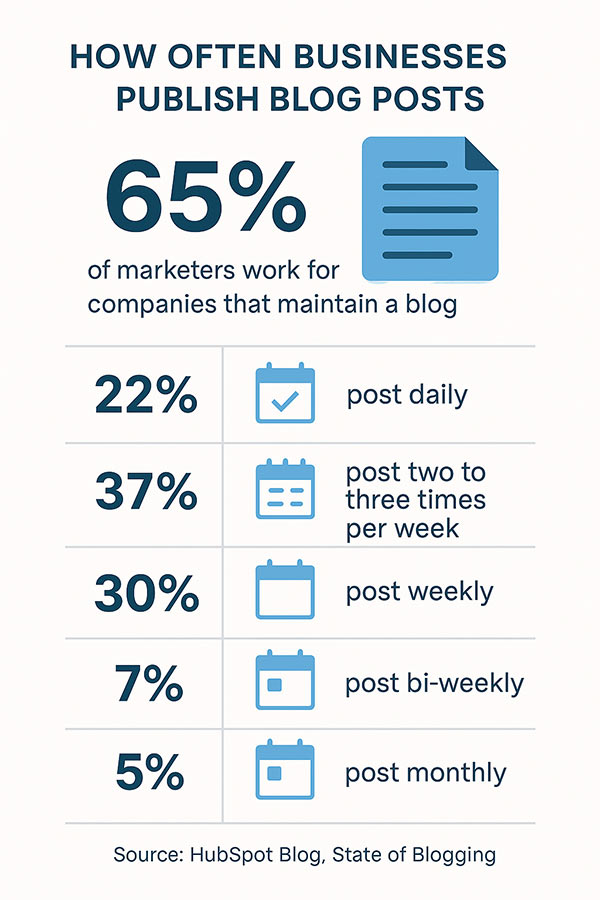
(https://blog.hubspot.com/marketing/state-of-blogging)
Do people still read blogs?
I asked this question in Network, and the answers were interesting!
- Idaho artist Paige Weber said she uses her art center’s blog to post about specific events and classes and that it’s easy to direct people to specific information.
- Edinburgh-based trauma therapist Anne Cheshire said Google Analytics tell her that people read her blog, but she would only read a blog post if it’s very specific and niche.
- UK-based parent coach Olga Cherrington said that she looks out for specific parenting blogs and she also looks at the blogs of people she’s interested in. She also said she reads blog content on Substack and finds answers with Gemini.
- Rae Jenson from the Hypnotherapy Training Centre in Scotland said she mostly uses YouTube to get answers.
- Edinburgh Wedding Dress Designer Mette Bailey said she reads blogs almost every day – if a Google search takes her to a blog.
People read and write blog articles:
- To share updates and direct people to key info.
- To provide niche content that gets read.
- To follow trusted voices and find answers:
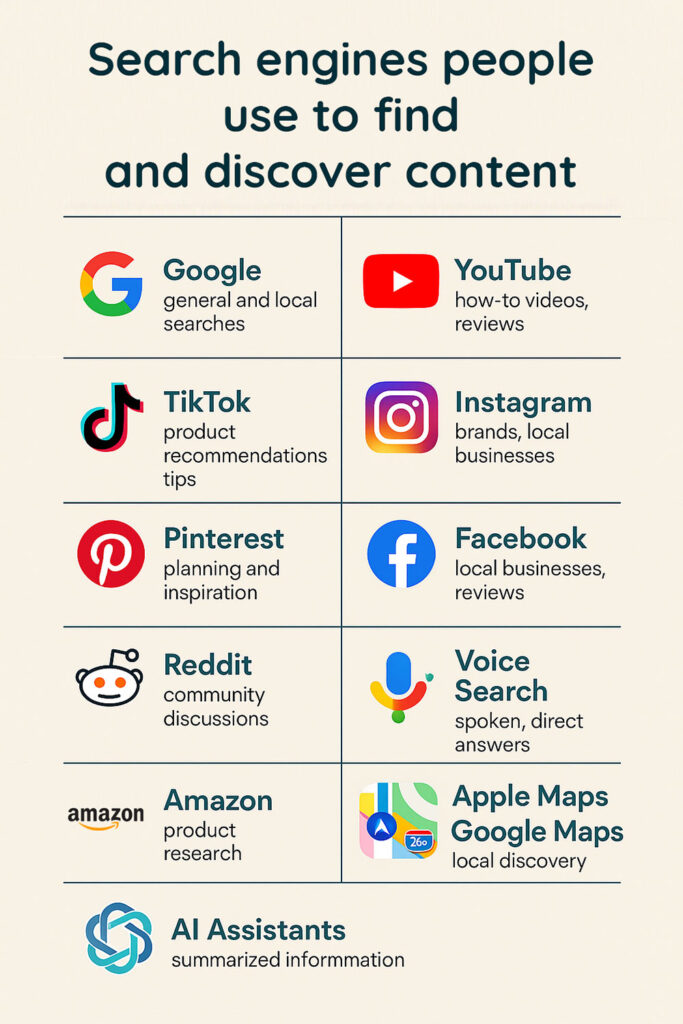
In short, content marketers use blogs (and other channels) to share focused updates, find specific information, and follow voices they trust. They also use social media platforms to find the information they’re looking for.
When did blogging start and what is blogging used for today?
- Blogging started in the late 1990s when people shared their thoughts online, a bit like online diaries.
- In the 2000s, writing blog posts became more professional. Businesses started to see the value in using blogs to connect with customers and share useful information.
- Today, blogging is less about personal updates and more about providing value – whether that’s tips, how-to guides, or answers to common questions – especially for small businesses wanting to grow their online presence.
With all this said – Is blogging still relevant today?
I bet you’ve already visited a blog today (other than this one)
Which of these have you done today?
- Look up a recipe: Most recipe websites are actually blogs with personal stories, tips, and affiliate links (for affiliate marketing).
- Search for a travel: ‘3 days in Rome’, ‘best places to visit in Cornwall’, most of the time you’re reading a blog.
- Try to fix something: ‘how to fix a dripping tap’, ‘how to restart a frozen laptop’, the answer usually comes from a blog.
- Check product reviews: Many comparison pages or ‘best of’ lists are blog posts by affiliate marketers.
- Learn a new skill: Want to knit, paint with watercolours? You’ll likely end up on a hobbyist’s blog.
- Look up parenting tips: toddler tantrums or GCSE revision strategies, parenting blogs are a go-to source.
- Understand health symptoms: Many wellness sites are blogs, often written by health professionals or people with lived experience.
- Research business tools – Blog posts often compare software, explain how to use tech, or offer productivity hacks.
- Find gift ideas: Gift guides such as ’10 gifts ideas for dog lovers’ are typically blog posts.
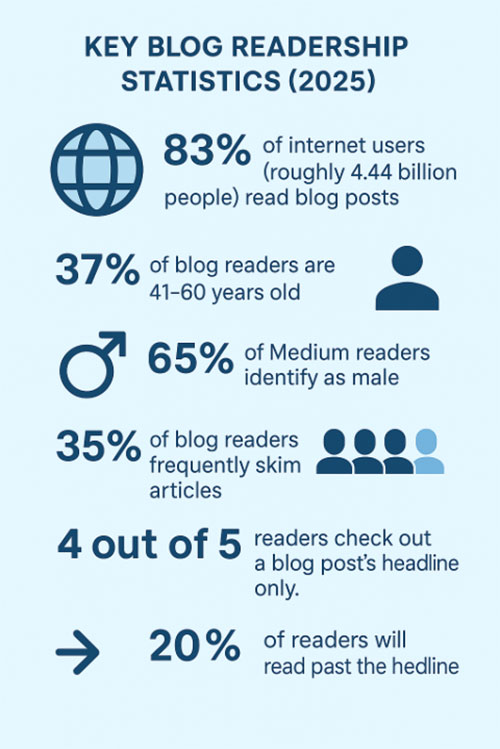
As you can see, blogging is very much alive. How can you use a blog in your business to raise brand awareness and get more customers?
What blogging is not
Business blogging is NOT writing personal stories like an online diary, or writing long essays that no one will read.
A business blog is something very different.
- It’s a simple and powerful way to answer your customers’ questions,
- show your expertise,
- and help your website show up on Google.
Instead of being about you, a good business blog is really about helping them – your potential clients.
Blogging isn’t dead – it’s evolved
Regardless if you’re running an online shop or a local business and you have a small internet presence, a blog can be a secret marketing weapon for your business.
You can use your business blog to attract new visitors to your website and convert some of your readers into leads and customers.
Big companies have long used blogs to answer questions their potential customers have.
If your business provides good answers to your customers’ problems, you build trust with them and they are likely to come back to your website for more information. They may even enquire and buy from you.
Your blog should not be separate, but an integral part of your website. It should be a natural extension of your online presence. Your blog posts should also integrate with your individual web pages. This means you can mention relevant blog posts on your service page so that people can learn more about your products or services.
Some great blog examples used by small and big businesses
Who still blogs today?
- Small business owners and solopreneurs (for visibility and SEO)
- Hobbyists (crafts, books, parenting, travel, etc.)
- Influencers (lifestyle blogs, food blogs)
- Companies (content marketing and lead generation)
- The list is endless
Why does blogging still matter?
- Drives traffic through search engines
- Builds trust and authority
- Helps connect with your audience
- Can be repurposed into social media, email content, or videos
What’s changed about blogging
- Readers now expect shorter, more helpful content
- Images, graphics and formatting matter more
- SEO is essential – it’s not just about writing what you feel
- Social sharing and email lists are part of the strategy
Why do people keep on blogging?
Here’s why people create blog posts:
- So that people find their website in a search engine: Blogging helps improve visibility on Google and brings in potential clients or customers.
- To build trust and show expertise: A well-written blog can position someone as knowledgeable and credible in their field.
- To explain their services or products in more depth: Blog posts can answer common questions, show behind-the-scenes, or explain the ‘why’ behind what they offer.
- To stay connected with their audience: Blogging gives people a reason to return to your site or join your email list.
- To drive traffic from social media or newsletters: A new blog post gives you something valuable to share that brings people back to your website.
- To educate or inspire: Bloggers often want to share their knowledge, lived experience, or ideas to help others.
- To sell something (directly or indirectly): Some blog posts are written with conversions in mind – whether it’s a product, a course, or booking a service.
- To share news or updates: This could be event announcements, launches, changes in opening hours – anything timely.
- To improve the website’s performance and longevity: Regular content helps keep a site active, which can benefit search rankings over time.
- To make money through affiliate links or ad revenue: Some blogs are monetised and the goal is to earn income from the content itself.
Business Blogging = Content Marketing
What is content marketing? In a nutshell: Sharing helpful, interesting, or entertaining stuff online (like blog posts, videos, or social media tips) so that people get to know, like, and trust you – and then want to buy from you or work with you.
Instead of saying buy this now, you're saying here’s something useful – and over time, that builds a connection that often leads to sales.
Time is of the essence
The more time someone spends with you, your business, your business – reading your valuable content, seeing your name, watching your videos, or chatting with you – the more familiar and comfortable they feel. And when people feel comfortable, they’re more likely to trust you… and trust is what leads to sales.
Let me tell you a quick story.
Not long ago, we were exploring options for a new car and considered Kia. We visited the dealership three times, always during quiet periods. Each time, we asked about a business lease and were told only one person could help — and that person was never available.
No one else offered to assist, or even allow us test drive the car. The sales team had time, but no interest in helping once they heard it was for business use.
There were barriers at every stage.
Then we visited a Skoda dealership. The salesperson offered a quick 10-minute test drive around the local area — no fuss, no hoops. Once he saw I was enjoying the car, he changed the route to give me more time behind the wheel. We had a great chat and I genuinely enjoyed the whole experience.
Now we know — our next car will be a Skoda.
Every visit to a business is a touch point. Kia had three chances to build trust and lost us. Skoda got it right on the first attempt.
Why touch points are so important – a successful blog is one of them
Most people don’t buy the first time they hear about you. They need multiple touch points – small interactions with your brand – before they’re ready. These touch points can be things like:
- Reading a blog post on your website
- Seeing your name pop up on social media
- Liking a post or watching a reel
- Getting your emails in their inbox
- Listening to a podcast episode where you share tips
- Talking to you in DMs or in a comment thread
- Downloading a freebie or signing up for a webinar
- Seeing a testimonial from someone like them
- Checking your prices or services page more than once
- Asking a question and getting a helpful answer
Each one is a step closer to trust.
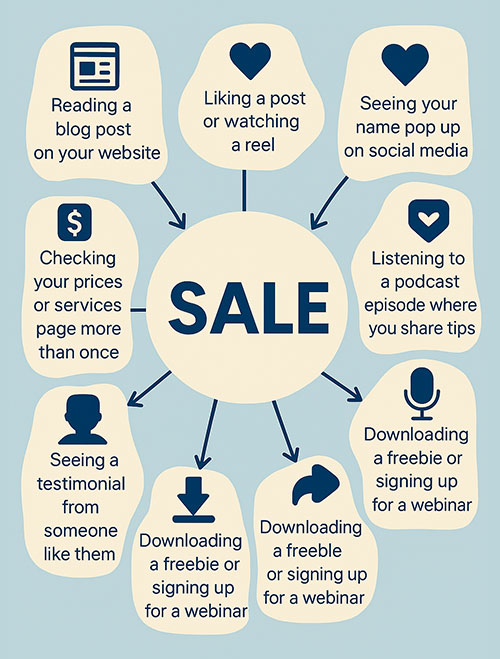
Content marketing isn’t about getting someone to buy right now. It’s about staying visible and building a relationship, so when they’re ready – you’re the obvious choice. Your business blog is right in the centre of all this.
Rule of thumb: The more expensive a product or service, the more time potential customers want to spend exploring options, getting answers, and eventually enquiring from the business that instils the most trust. If there's nothing to "consume" on your website, they cannot build trust.
What should you blog about – here are some top tips
- Focus on solving problems your potential customer has
- Use headings, images, bullet points (like this list) and clear formatting that allows the reader to scan your pages
- Think about keywords but write like a human
- Be consistent – even one blog a month can help
Don’t worry about being perfect – aim for useful.
Here are the top mistakes to avoid when writing blog posts for your business
- Writing only about yourself: Blogs should help your ideal customer. If every post is about you rather than solving their problems, you’ll lose readers quickly.
- You ignore search engines: Skipping basic SEO like using keywords, headings, and meta descriptions means your posts are unlikely to be found on Google.
- You try to sell in every post: Blogging isn’t about constant selling. It’s about building trust by being helpful, informative, or inspiring.
- Being too broad or vague: Posts that try to appeal to everyone often appeal to no one. Specific, niche topics work best — especially for Google.
- Writing once in a blue moon: Inconsistent blogging makes it hard to build momentum or trust. Even one post a month is better than a scattergun approach.
- Using jargon or overcomplicated language: Simple, clear writing builds connection. No one’s impressed by long words or industry lingo they don’t understand.
- Forgetting to include a call to action: Your post might be brilliant — but what do you want the reader to do next? Sign up, get in touch, or read something else?
- Not sharing posts anywhere: Just hitting ‘publish’ isn’t enough. Posts need to be shared on social media, newsletters, and anywhere your audience hangs out.
- Giving up too soon: Blogging takes time to build trust and SEO results. Many give up after 2 or 3 posts and miss the long-term benefits.
- Not checking what your audience actually wants: If you’re guessing what to write without asking or observing your audience, you might be writing great content for the wrong people.
What makes a successful blog?
Creating a successful blog is about more than just publishing a few posts and hoping for the best. It takes content creation skills, an understanding of your audience, and a clear strategy for reaching readers across your website and any social media site where you promote your work.
Whether you are a seasoned content creator or just starting out, focusing on quality content and understanding how readers engage with blogs today is the key to long-term blogging success.
1. Focus on quality content, not just quantity
The foundation of any successful blog is consistently creating quality content. Readers are looking for posts that solve a problem, teach them something new, or offer inspiration. Well-written content that answers questions and offers value will always stand out, even as people’s attention span shortens online.
2. Master the art of long-form content
While short social media updates have their place, long form content remains crucial for blog readership. Detailed, well-structured blog posts give you the chance:
- to demonstrate expertise,
- keep readers on your site longer,
- and improve your visibility on search engines.
Successful bloggers are not afraid to go in-depth when a topic deserves it — as long as the writing stays clear, useful, and easy to scan.
3. Share your recent posts effectively
Promoting your recent posts through email newsletters and your favourite social media site is just as important as publishing them. Sharing fresh content helps drive traffic back to your site and keeps your audience engaged between blog updates.
It's not the best content that wins. It's the best promoted content that wins.
Andy Crestodina
4. Make the most of related posts
Encouraging readers to explore more of your site is a smart way to increase engagement. Display related posts at the bottom of each article to help visitors find more of your written content that matches their interests. This not only improves time on site but also boosts the chances of conversions over time.
5. Build trust through regular publishing
Blogging success often comes down to showing up consistently. Whether you post once a week or once a month, regular updates show you are active, reliable, and committed to helping your readers. Reading blogs that update frequently creates a sense of trust — something you want to foster with your own audience.
6. Choose the right blogging platform
A user-friendly blogging platform makes a huge difference. Whether you choose WordPress, Squarespace, Wix, or another system, it should make it easy to organise posts, update content, and optimise for SEO.
The platform you choose should also make it easy to showcase your popular posts and allow for simple navigation across your categories and topics.
7. Understand modern blog readership habits
Today’s blog readership is different from ten years ago. Many people skim articles rather than read every word. Structure your posts for easy scanning by using:
- Clear headings
- Bullet points
- Short paragraphs
- Relevant images or graphics
This approach respects modern attention spans and makes your blog feel more accessible to a wider audience.
8. Become a well-rounded content creator
The most successful bloggers are not just good writers — they are well-rounded content creators. They know how to repurpose their blog content into social media posts, short videos, email tips, and even downloadable resources.
Thinking beyond the blog post itself helps you build a recognisable brand across every social media site you use.
A successful blog is built through a mix of creativity with mixed-in personal experience, consistency, and audience understanding. Focus on quality content, create thoughtful long form content, highlight your popular posts, suggest related posts, and meet your readers where they are — whether they find you through Google, a social media site, or an email newsletter.
Blogging success is absolutely still possible. The difference now is that being a content creator means being flexible, strategic, and reader-focused at every stage.
Still unclear what to blog about?
You need a ChatGPT account (free!).
After you've clicked on the link, simply enter your product, service or industry in the ChatGPT field and press enter. No other prompt needed!
You will get a list of blog ideas your customers want to read.