Quick summary
SEO (search engine optimisation) is the process of improving your website so it shows up when people search for topics related to your business. To get started, you need to understand how search engines work, choose the right keywords that your audience uses, and optimise your website content and structure around those terms. Make sure Google can crawl and index your pages, create helpful and relevant content, and use tools like Google Search Console to track performance. Over time, build authority through links and good user experience, and review your results regularly to improve. The goal is to attract more relevant organic traffic without paying for ads.
Imagine this:
You want to build a house, a really nice home for you and your family, a home that’s super comfortable, looks great and welcomes you. What would be the first thing you do to achieve that dream?
- You’d look for a building plot.
- You’d look for an architect.
- You’d look for a builder.
- The project would get started with the foundations, the walls, the roof and so on.
- You then decorate the house, you buy furniture and eventually you buy the scatter cushions for your couch.
Let’s look at this again in the reverse order: You want to build an amazing home and here’s what you do first:
- You buy scatter cushions.
- You buy furniture.
- You look for a builder.
- You look for an architect.
- You look for a building plot.
Doesn’t make sense, right?
Unfortunately, this is how most websites are built… Scatter cushions first, building plot and foundations last.
In website terms this could mean that you spend a lot of time working on your design and adding lovely photos to your website, or you spend time trying to rank for certain keywords and you get frustrated when other (outdated) websites outrank your amazing new website in Google.
Most websites are not penalised by Google for poor SEO; instead, they simply struggle to perform well because search engines cannot fully understand, trust, or prioritise them over stronger competitors.

What are the steps for getting started with SEO – Search Engine Optimisation
Google has a document published which is called the Google Webmaster Guidelines. This document explains the elements a website needs to have for Google to consider it “rank-worthy”!
Without them, it will be hard to move past your online competition!
I have provided a simplified graphical guide to these guidelines below!
So what are these building blocks?
In summary they are:
- Technology basics (the foundation)
- Structure & Optimisation (the architect)
- Content Relevancy (the scatter cushions)
- Backlinks – (the icing on the cake)
Let’s look at them step by step.

1. Technology basics for SEO – The foundation for good Search Engine Optimisation
Try not to skip this – it’s like not having a foundation for your (online) home. It’s less geeky than you think!
Why SSL is important for SEO
Your website must be secure. Make sure you use an SSL certificate for your website. If it’s already installed, you will see a little padlock in the address bar beside your domain. Check out this article about Why you need an SSL certificate on your website.
What happens if your website doesn’t have SSL? Google might display your website as not secure. They sometimes add a line to the search results indicating the website is not secure. Would you click on a link to a website that says “Insecure – are you sure you want to continue?”

Why website speed is important for Search Engine Optimisation
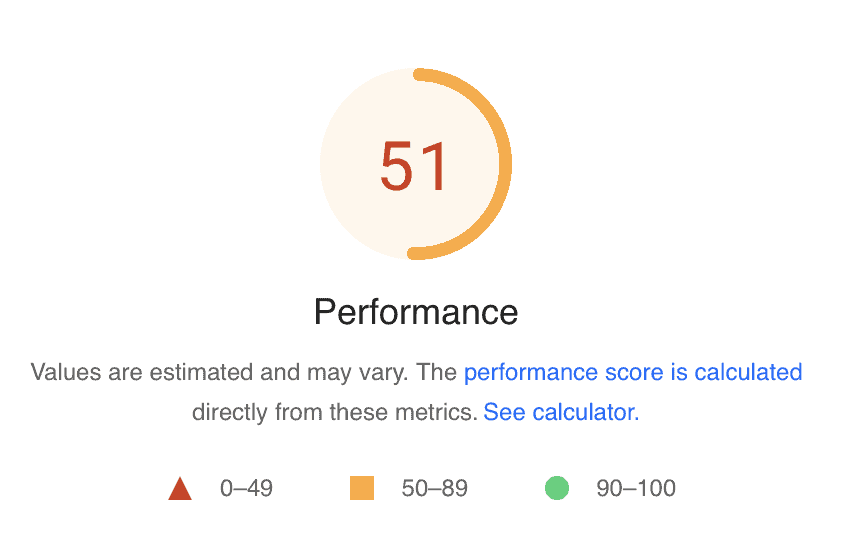
We’ve all visited websites that take far too long to load. Slow pages frustrate users, reduce engagement, and make people far more likely to leave before they interact with your content. While Google rarely penalises websites directly for speed issues, faster websites tend to perform better in search because they provide a better user experience.
One of the most common causes of slow websites is poorly optimised images.
Large image files, especially hero images and banners, can significantly increase load times if they are not handled correctly.
Removing slideshows from your homepage can also improve performance. Sliders are no longer considered best practice and often load multiple large images and scripts at once, slowing your site down without adding real value.
Other areas to check include the size and format of key images across your pages and whether your website uses modern image optimisation methods.
Many modern websites now rely on automatic optimisation, responsive images, and next-generation formats to keep pages fast without manual file limits.
If performance issues persist, your web hosting setup may be part of the problem. Slow servers, limited resources, or outdated hosting environments can affect website speed regardless of how well your site is built. In that case, it’s worth contacting your hosting provider to understand what level of performance they offer and whether your website is on the right plan.
Website speed is not about chasing perfect scores. It’s about creating a smooth, fast experience that keeps users engaged and supports stronger search performance over time.
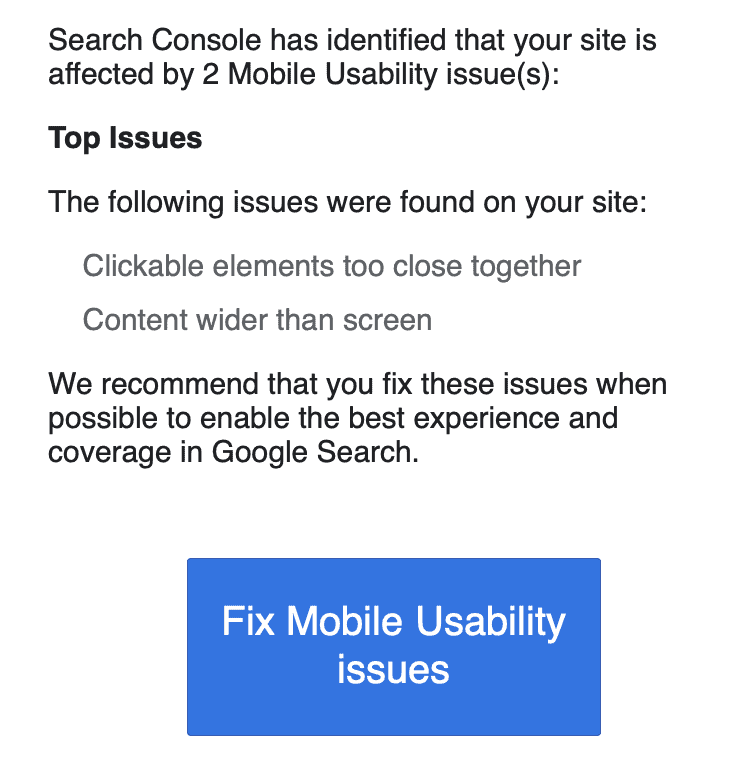
Your website MUST be mobile friendly (iPads, tablet computers and mobile phones!)
Google uses software that lets them see what your website looks like to a user on different mobile devices. If your website is not mobile friendly – Google knows!
Google penalises websites that are not mobile friendly. This means even if your website has lots of amazing information, if it’s not mobile friendly, Google will not show it high up in the search results.
You may think that your website visitors look use a PC or laptop to look at your website and it looks fine there, right?
It’s always better to check the actual data. Worldwide, over 58% of people access websites and blogs on their phone (you can check the actual stats here).
Have you ever been on a really outdated website and you had to scroll left and right (eeek!!) in order to read text? It’s not a nice experience.
Check that headlines are not too big, images are displayed properly and the layout of your website still makes sense on mobile devices.
2. Structure & Optimisation (the architect) – building on your foundation for good SEO
Be an architect: Plan your website on paper before you start building anything online! Website builders are so “intuitive” and want you to just start building your website, suggesting it’s all so easy!
A good website (and one that’s well optimised) starts with a plan.
Structure the pages in a logical manner which can be understood by humans. Make sure you include links to other pages within each page. Avoid any of your web pages being a dead end – always provide one or several links to other pages on your website.
Avoid people having to click the browser’s “Back” button. If they have to do that, it’s a bad user experience.
Always think – what would they want to know next? Where should they click next? What would help them now?
Optimise your content in a logical way, using headlines in a logical order rather than because they’re pretty. Use bullet points, make use of the title of each page and add ALT tags to images.
You can also read the ultimate guide to photos on your website on my blog.

3. Content, Relevancy, Keywords (the scatter cushions)
Good SEO content is not about talking endlessly about your business. It’s about helping the person who has landed on your website solve a problem or make a decision.
People visit websites because they want something specific. They might be looking for information, reassurance, prices, comparisons, or clear next steps.
If your content focuses only on you, your background, or what you did last week, it won’t meet that need.
This is the type of content website visitors actually care about:
- Clear information about services or products
- How-to guides and explanations
- Price guidance or starting costs
- Reviews and testimonials
- Comparisons and “best option” advice
- Answers to common questions and problems
- Educational or helpful insights
Search engines now focus far more on relevance and usefulness than on exact keyword repetition. Keywords still matter, but they work best when they appear naturally within content that genuinely helps the reader.
When your website answers real questions clearly and honestly, visitors stay longer, trust you more, and are more likely to take action. That combination of relevance, engagement, and clarity is what supports SEO in 2026.
Remove the fluff, keep the helpful content, and make every page earn its place by serving your visitors first.
4. Backlinks: Building authority over time
Backlinks are links from other websites to your own. Search engines use them as a signal of trust and authority, especially when those links come from relevant and reputable sources.
It’s no longer about collecting as many links as possible. A small number of high-quality, relevant links is far more valuable than a large number of low-quality ones. Links from websites in your industry, local area, or professional network carry much more weight than random links from unrelated sites.
The most effective way to earn backlinks is by publishing content that people genuinely want to reference, such as helpful guides, useful resources, case studies, or original insights. Mentions from partners, suppliers, directories, and local organisations also contribute to your website’s authority.
Backlinks take time to build and should grow naturally. They are not something to rush or outsource blindly. Treated as part of a long-term strategy, backlinks support stronger visibility and help your website compete with more established businesses over time.
SEO works best when done little and often
SEO does not need to be overwhelming or time-consuming to be effective. It works best when it becomes a small, regular part of how you look after your website.
Making tiny improvements over time, such as improving one page, answering one common question, or updating one piece of content, adds up. Search engines reward consistency and quality far more than occasional bursts of activity followed by long gaps.
Think of SEO like a savings account. You do not need to deposit a large amount all at once for it to grow. Regular, manageable contributions build momentum, strengthen your website over time, and lead to more sustainable results without burnout.