Quick summary
SEO for UK trades and local service businesses still relies on the same fundamentals: clear service pages, local relevance, trust, and consistency. AI hasn’t changed what Google rewards. SEO takes time, needs ongoing effort, and works best when focused on attracting the right local enquiries rather than chasing rankings or traffic volume.
SEO expectations vs reality for UK businesses offering local services, such as trades and construction
- SEO can bring steady enquiries, but it works best when expectations match how it actually performs in the real world.
- The points below are written for business owners who want practical results, not marketing fluff.
Expectation
AI SEO is fundamentally different
Reality: AI has changed how people search for information
The same core SEO principles still apply with AI SEO: clear service pages, local relevance, genuine expertise, and content written to help real customers.
- AI does not replace the need for clear service pages, local relevance, and trust signals.
- Content still needs to reflect real services, real locations, and real experience.
- AI looks for more than just technical SEO, but trust signals such as reviews, regular mentions of your business on other websites etc.
AI is here to stay.
We have been using AI since it first came out in November 2022 and it’s been amazing to see its development and improvements and the many different use cases.
First of all, for the foreseeable future, there will still be a huge number of users who will not use AI to find businesses, but younger and/or more technically knowledgable users will already have adapted to using AI to get business recommendations and make a buying or enquiring decision based on what AI has summarised.
I personally use AI to plan holidays, find the best spots to visit in a new location, the best restaurants to visit based on the best reviews and so on.
So how does your business show up in AI? There are many courses and service providers out there already who offer this as a service: make your business show up in AI. However, we don’t quite know 100% how AI uses our information and shows our business over others.
When people search in Google, they tend to enter a few keywords and Google tries to figure out the intention behind the keywords.
When people search in AI, they enter full sentences. The search is more conversational.
I am showing one example below of one of our clients – a scaffolding company. There are several reasons they show up in AI:
- They’re actively working on gathering reviews
- Their website is optimised using a solid SEO structure so that both Google and AI can assess what the company is about.
Have a look at the 3 examples below to see the differences.
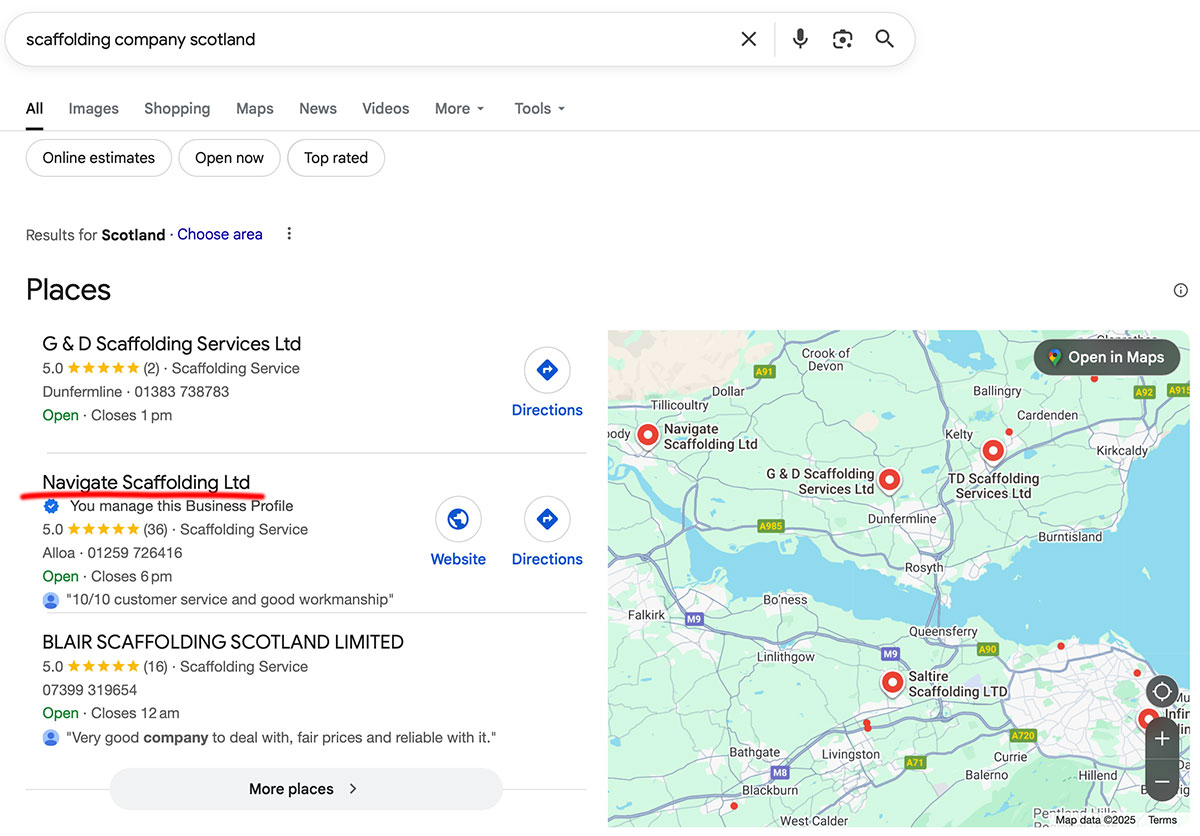
- I entered the generic keyword “scaffolding company Scotland”.
- Our client Navigate Scaffolding shows up top – probably because of my local proximity, because we manage the Google profile and some other reasons Google won’t tell us 🙂
- If you are located in the North of Scotland and you search for the same keywords, results are likely to be different.
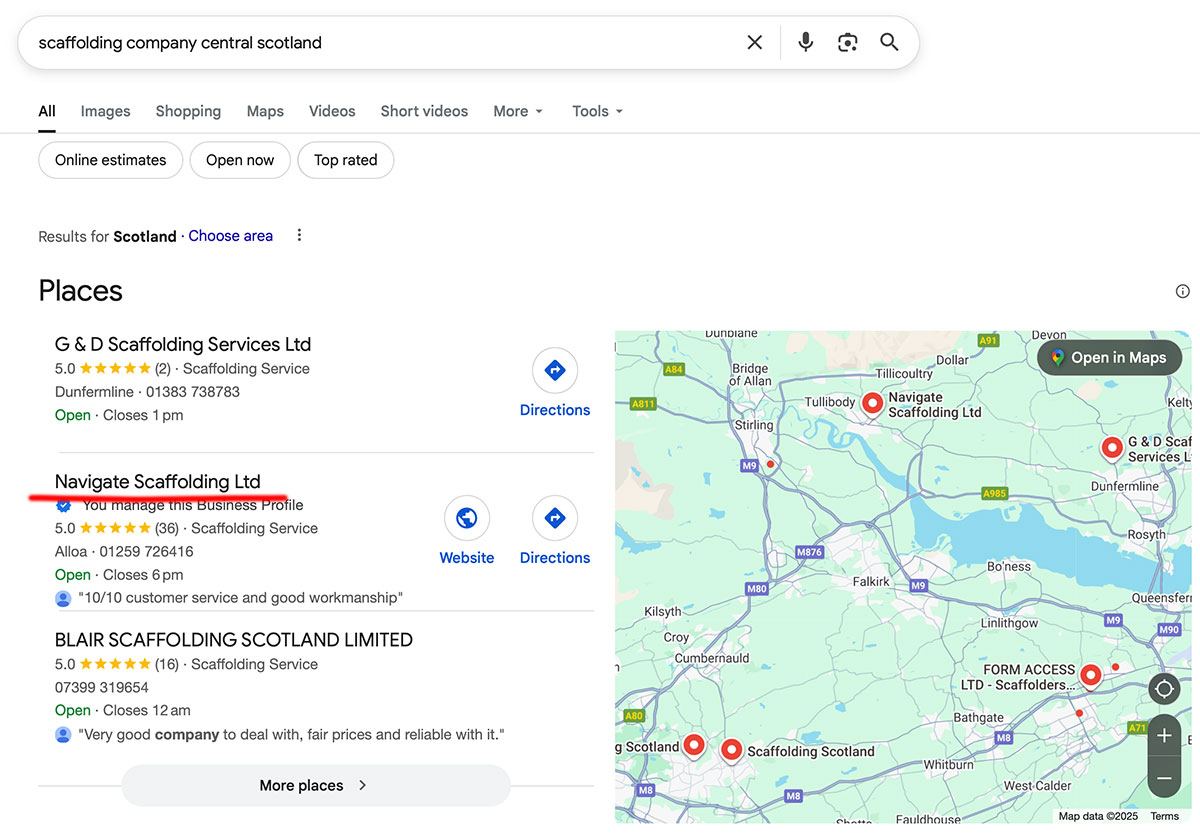
- I entered a slightly more specific keyword “scaffolding company central Scotland”.
- Our client Navigate Scaffolding shows up top.
- The same applies: if you are located in the North of Scotland and you search for the same keywords, results are likely to be different.
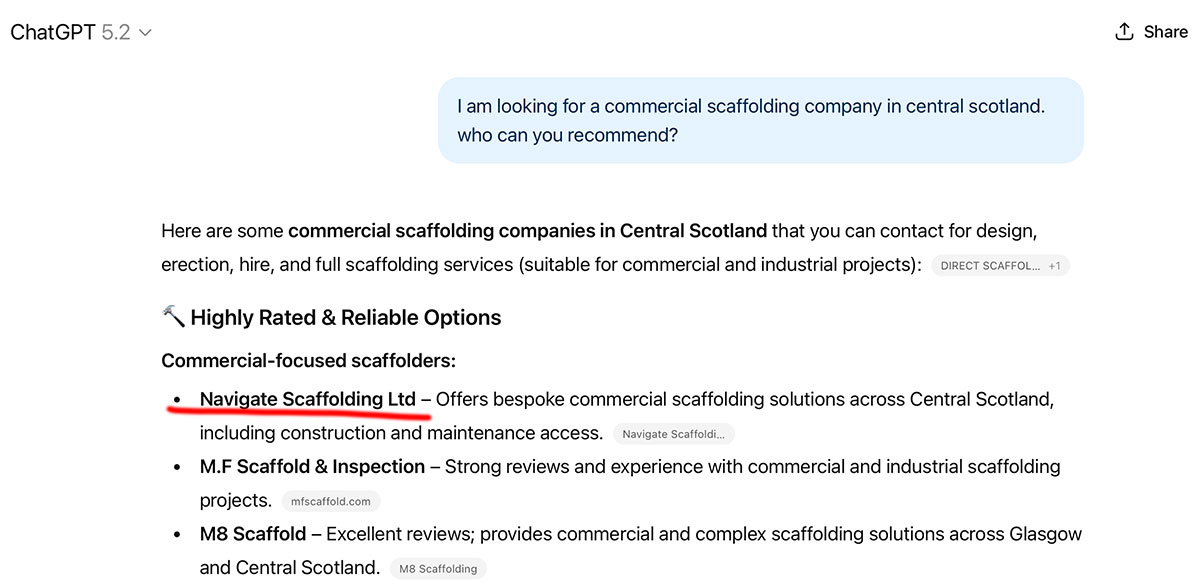
- The “search term” is more conversational and I am asking for a recommendation.
- Our client Navigate Scaffolding shows up top.
- If you’re located somewhere else in Scotland, the results are likely similar.
- AI generates the results fresh after every query, so the results will look different after every query.
Expectation
Rank number one overnight
Reality: SEO takes time and consistent effort
- Google needs time to trust your website, especially in competitive trades.
- Local SEO website improvements can have a quick impact, sometimes within days of SEO implementation
- Early improvements often take 3–4 months, and strong local visibility can take 6–12 months.
- New websites usually take longer than established websites.
- Consistent activity beats one big push.
If you haven’t updated your website in a while chances are that Google hasn’t visited your website for a while either to check if there’s new content worth ranking and showing in the search results.
If you then do an SEO project, update your website, add new content, it will take time for Google and AI to notice the changes.
Every time you add a new content item to your website, a timestamp is added. Search engines can see this time stamp and make a judgement about how often your website is updated. If your timestamps usually have several months (or years!!) between them, search engines don’t come by often because they assume you don’t regularly update your website.
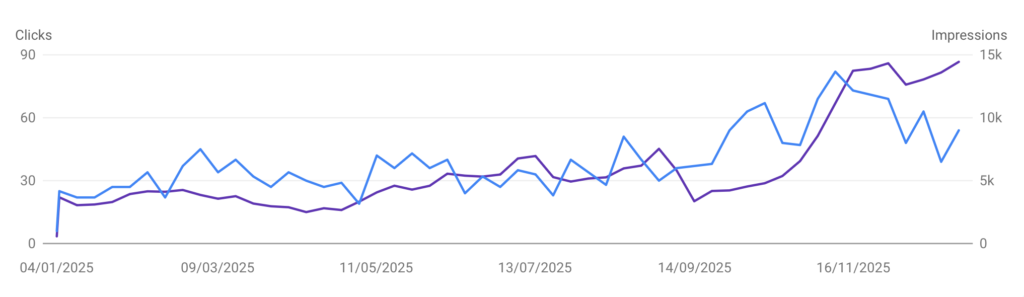
Have a look at the below example. We started the SEO project in May 2025 with regular website improvements and the addition of relevant blog posts. The first few months, it looked like nothing was happening, but we started seeing quite an uplift from September onwards. Even though in September 2025, there was a major Google update where most websites had a drop in impressions and website clicks. Our client’s website actually had more impressions and clicks from September onwards.
Expectation
SEO is a one-time fix
Reality: SEO is an ongoing process
- Search results change because competitors update their sites and Google updates its ranking systems.
- Ongoing SEO for trades often includes:
- Adding or improving service pages
- Updating old content so it stays accurate
- Adding recent project photos and case studies
- Keeping your Google Business Profile active
This is true for most businesses and websites. However, if you have a small local business trying to attract clients in your specific local area, SEO can be a one-time fix.
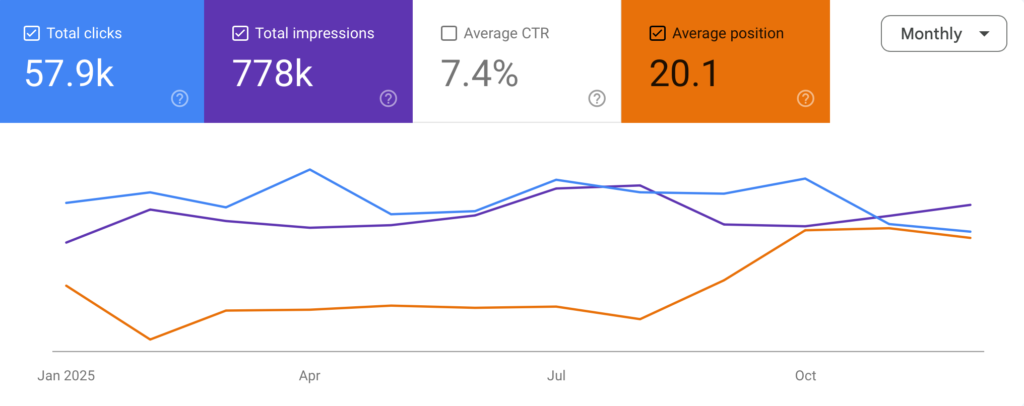
Have a look at the below graph. This client moved from a different web design company over to us. We redesigned the website and took it live in July 2025. The website was already performing well, but we improved SEO and made sure there wasn’t a drop in rankings. As you can see, the average position in Google has improved dramatically after taking the website live.
Expectation
SEO is easy
Reality: SEO is more complex than it looks
- Good SEO is a mix of technical setup, useful content, and local trust signals.
- Common areas that catch trades businesses out include:
- Slow websites and poor mobile usability
- Thin or generic service pages
- Missing location relevance
- No clear next step to contact you
SEO consists of a few basic rules, yet many SEO experts make it out to be some super complex task that requires some “secret” knowledge.
The basic SEO rules are easy to learn and implement. However, there are additional aspects beginners or inexperienced SEOs don’t put in place. This is where disappointment starts and the believe in SEO ever changing the bottom line fades quickly.
SEO is more than just meta titles, ALT tags and a few internal links.
In most cases, SEO has to go hand in hand with content marketing, or at least have a decent amount of relevant content on your website.
A website without (relevant) content cannot and will not rank in Google.
Expectation
SEO is cheap
Reality: good SEO costs time, money, or both
- You either invest time doing the work yourself or pay someone to do it properly.
- Cheap SEO packages often mean shortcuts, templated work, or no real strategy.
- SEO is usually most cost-effective when you focus on the pages that directly generate enquiries.
As mentioned above, SEO isn’t a one-off project that you put in place and leave it. Good SEO includes regular updates.
Expectation
SEO is only about keywords
Reality: SEO is about trust, relevance, and user experience
- Keywords matter, but Google also looks at usefulness and credibility.
- For trades and construction businesses, this often means:
- Clear service descriptions that match what customers search for
- Real photos of your work and your team
- Strong reviews and testimonials
- Simple contact options on every key page
Search engines no longer just index and rank content because there’s a certain amount of the right keywords in it.
The algorithms are way more clever than that. There are so many different aspects a search engine “checks” before deciding if a certain page on your website is ranked highly in Google.
Your website content needs to be trustworthy. This means you need to proof the claims you put on your website. You can’t just say “we’re the best XYZ company in ABC area”. You need to proof that. For example “we are the best XYZ company in our area based on 5000+ 4 and 5 star reviews”.
If your website only summarises in a couple of sentences that you’re a building contractor, but you don’t specify what you target of expertise is (e.g. home extensions, loft conversions etc.), a search engine and AI cannot show your website because you haven’t given it the content it needs to rank your website.
SEO is more than just keywords. It’s about website usability, website speed, content quality and much more.
Expectation
SEO is only for big businesses
Reality: SEO is often more effective for local trades
- Local SEO is built for businesses that serve specific areas.
- Small trades businesses can outrank bigger companies by showing strong local relevance and trust.
Most “big” businesses rely on SEO as one of their marketing channels.
A huge proportion of small businesses don’t try SEO because of this assumption. They might think they have no chance to rank in search engines.
There are industries where it’s unlikely that you outrank the industry giants, such as weight loss, finance, jewellery, insurance and many more. A simple search in your favourite search engine for your dream keyword will instantly show you who the industry big hitters are. But even those industry have keyword opportunities.
However, if you run a local business, providing your services in a specific local area, you have a huge chance to be found in search engines by adding local SEO signals to your website.
Expectation
SEO is not measurable
Reality: SEO performance can be tracked
- Useful tracking includes:
- Calls and contact form enquiries
- Google Business Profile calls, messages, and direction requests
- Website visits from your service area
- Which service pages lead to enquiries
- Rankings alone do not matter if they do not create enquiries.
Here are just a few examples of what you can track:
- How someone found your website and then ended up calling you.
- What page they first opened after clicking in Google and what page they last looked at before enquiring or leaving your website.
- How many pages someone looked at before they sent an enquiry
Expectation
More website traffic means more jobs
Reality: the right traffic matters more than volume
- High traffic is useless if visitors are outside your service area or not looking to hire.
- Trades SEO should attract local people who are ready to book.
“More traffic” is usually the first thing clients want. However, we need to look at your numbers first.
- Let’s say you run a business with £500,000 annual turnover.
- Your average project size is £25,000.
- This means you need to attract 20 new contracts every year.
- You want to push your annual turnover to £750,000 (i.e. 30 new contracts).
- Let’s say you get new clients from recommendations (word of mouth) and website enquiries.
- You currently get 5 enquiries per month and one of those turns into a new contract, i.e. 12 contracts per year. The remaining 8 contracts you need to achieve £500K turnover come from recommendations.
- Your website currently has 150 visitors per month.
There are several things you can do:
- Work on your conversion rate. You already receive 5 enquiries per month, but you’re only converting 1 into a contract. If you converted 2 every month, you won’t need more website visitors.
- Work on your number of website visitors: If 150 websites visitors result in 5 online enquiries, then without changing the website, 300 monthly visitors should result in 10 enquiries, i.e. 2 new contracts per month.
- Encourage more existing clients to recommend you by providing a super service and also offering them an incentive such as a referral fee.
As you can see, you don’t need 1,000s of website visitors to get more enquiries.
If your website currently has hundreds of visitors but you receive no enquiries, you don’t have a traffic problem, you have a website problem!
Expectation
Once I rank, I will stay there
Reality: rankings move and need protecting
- Rankings shift because competitors improve, new businesses appear, and Google updates results.
- Maintenance helps you keep the positions you have earned.
Rankings are really fluid. One week you might rank for a certain keyword and before you know it, your website is buried on page 2.
You need to keep adding relevant and good quality content to your website to maintain rankings. You need to work on your link profile, build domain authority and keep gathering reviews.
SEO is like marketing – you can never really stop doing it.
Expectation
A good-looking website automatically ranks well
Reality: Design and SEO are different things
- A site can look great and still fail because it loads slowly or does not explain services clearly.
- For service businesses, clarity and speed usually outperform fancy design features.
I regularly hear this request: We want a slideshow, we want lots of videos and moving elements on our website.
Ask yourself: When was the last time you leaned back to watch a website slideshow??
Moving elements only make sense if they have a function to explain content better, for example before & after sliders. Keep your service business website clean, avoid distractions, present your content clearly. Your users and search engines will thank you.
Expectation
Social media can replace SEO
Reality: social posts fade, SEO keeps working
- Social posts have a short lifespan, while SEO can bring enquiries for years.
- Social and SEO work best together, not as substitutes.
Some micro businesses run their entire operation on social media. That’s a very risky strategy because you don’t own the platform nor the content you post to the platform (yes, you read that right!).
I have seen it happen several times that Meta shut down a high-performing Facebook page and it took the business owner several months to get it back.
One of our clients had monthly sales of £35K on Facebook. Someone reported their page and Facebook took it down – for 3 months. That’s where ALL their sales came from. Can you take a £105K cut in your turnover?
Start with your content on your website – the platform you own. Share your content on social media and entice people to visit your website. But make their visit worthwhile.
Expectation
Google Business Profile is optional
Reality: it often drives the most local leads
- For many trades, Google Business Profile generates more calls than the website.
- Ignoring it can limit results even if your website SEO is strong.
According to Google: “If your business either has a physical location that customers can visit, or travels to customers where they are, you can create a Business Profile on Google.”
You can set up a Google Business profile if you’re offering your services in a specific area.
Businesses that only operate online, with no physical premises and no in-person services, are not eligible for a Google Business Profile.
Any of these following business types should have Google Business Profile:
- Hairdresser or barber with a salon
- Plumber or electrician
- Dentist, GP surgery, or physiotherapist
- Restaurant, café, or takeaway
- Driving instructor
The following business types should not have Google Business Profile:
- Online-only e-commerce store
- Virtual assistant or online consultant
- Digital product seller
- Blog, affiliate site, or content-only website
- Remote SaaS or software company
Expectation
I need loads of blog posts
Reality: service and location pages usually matter more
- Most trades businesses get faster wins from:
- Strong service pages
- Location-focused pages for key areas you serve
- Project pages showing real work
- FAQs based on real customer questions
- Blog posts can help, but only when they support enquiry-driven pages.
Blogging is great and can attract a lot of visitors to your website. It can lift a website’s authority and most importantly provide lots of useful information to potential new customers.
Think about your business values and what message you want to convey.
Expectation
Cheaper SEO gets the same results
Reality: low-cost SEO often means shortcuts
- Cheap SEO often involves generic content, poor-quality links, and no local strategy.
- Bad SEO can waste months and make recovery harder.
You might get lucky with a cheaper SEO package. However, you need to treat SEO as a professional service, and professional services don’t usually come cheap.
SEO packages can vary in price depending on:
- the size of your website
- the competitiveness of your industry
- your location and target area
- the level of ongoing work required
- the experience of the SEO provider
Summary
- SEO works best when it is treated as a long-term investment.
- The goal is not being number one for everything, it is getting more of the right local enquiries.
- Simple, consistent improvements compound over time.